


You check the price, and it's higher than last month. Or lower than you expected. Either way, nobody explained why. That's the frustrating part about heating oil — the price moves constantly, and most companies don't bother telling you what's behind it.
If you're a Nassau County homeowner, you're not just curious about this in the abstract. You're trying to figure out whether to order now or wait, whether to lock in a price or stay flexible, and whether the number you're being quoted is anywhere near fair.
This page gives you straight answers to all of that — starting with the five factors that actually drive heating oil prices today.
What You're Actually Paying For in Heating Oil Prices Today
Before getting into the five factors, it helps to understand what makes up the price of a gallon of heating oil in the first place. According to the U.S. Energy Information Administration, crude oil accounts for roughly 48 to 53 percent of the final price. Refining costs add another 15 percent. The remaining 37 percent covers distribution and marketing — meaning the trucks, terminals, staff, and overhead it takes to get fuel from the refinery to your tank in Nassau County.
That breakdown matters because it tells you where the price is actually set. The majority of what you pay is determined by global commodity markets, not your local oil company. We control a portion of the cost — but we don't control crude oil, and neither does anyone else on Long Island.
Why Crude Oil Prices Affect Your Heating Oil Bill
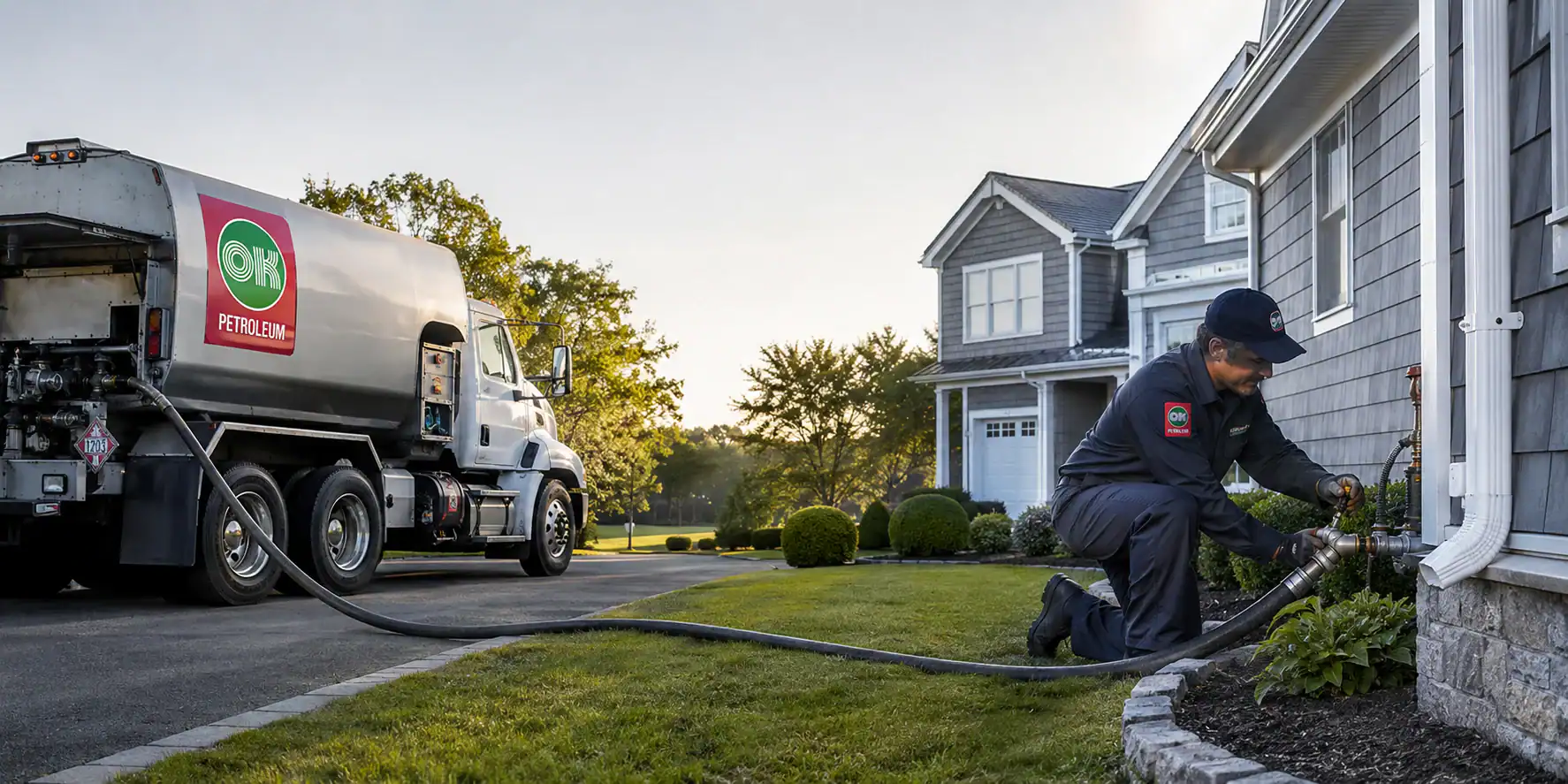
Crude oil is the raw material that heating oil is refined from, which is why the two prices move in near-lockstep. When crude oil rises on global markets — because of OPEC production cuts, tensions in the Middle East, or shifts in worldwide demand — heating oil prices follow within days. When crude falls, heating oil prices typically come down too, though sometimes with a slight delay.
This relationship is worth understanding because it reframes how you think about price changes. When your bill goes up in January, it's usually not because your oil company decided to charge more. It's because the commodity that makes up more than half the product's cost spiked on a market that trades in New York, London, and Singapore simultaneously.
For Nassau County homeowners, this has a very practical implication: the best time to buy is often not when you need oil most urgently. Winter demand, combined with cold-weather supply disruptions, puts upward pressure on prices at exactly the moment when you have the least flexibility to shop around. The buyers who come out ahead are usually the ones who planned ahead — ordering in late summer or early fall before the seasonal run-up begins.
Geopolitical events add another layer of unpredictability. Conflicts affecting oil-producing regions, decisions by major producing nations, and shifts in global trade policy can all move crude prices within hours. None of that is within anyone's local control — but knowing it's happening helps you make better decisions about when and how to order.
How Weather and Seasonal Demand Drive Price Swings in Nassau County
Weather is the most immediate and visible driver of heating oil price volatility, and nowhere feels this more acutely than the Northeast. Nassau County winters are real — January temperatures regularly drop into the low-to-mid 30s, and extended cold stretches can run for weeks. When that happens, everyone in the region needs more fuel at the same time.
The problem isn't just demand — it's the combination of demand and disruption. A major winter storm doesn't only increase how much oil people are burning; it also slows down or temporarily halts deliveries. Roads become difficult to navigate, terminals face operational constraints, and the same event that's driving up consumption is simultaneously reducing supply. That's when prices spike the hardest and fastest.
This is why the pre-season window — roughly August through September — is when the most price-aware Nassau County homeowners make their moves. Crude oil demand is lower, heating season hasn't started, and distributors have more flexibility to offer better pricing. Waiting until November or December means buying into a market that's already priced in winter demand. It also means competing with every other household that waited too long.
Beyond the immediate season, longer-range weather forecasts matter too. A winter predicted to be colder than average tends to push prices up even before the first cold snap arrives, because distributors and traders are pricing in anticipated demand. The inverse is also true — mild winter outlooks can keep prices relatively stable. Staying aware of seasonal forecasts isn't just useful for planning your wardrobe; it's genuinely relevant to what you'll pay for heating fuel.
Heating Oil Price Per Gallon Today: Local Factors That Affect Nassau County Homeowners
Global crude prices and winter weather get most of the attention, but the local factors — refining capacity, distribution infrastructure, and regional inventory — have a real effect on what you actually pay per gallon in Nassau County. These are the variables that separate a $3.20 price from a $3.50 price for the same product delivered to the same street.
Understanding the local side of the price equation also helps you evaluate whether a quote is competitive. Not every oil company operates with the same cost structure, and those differences show up in your bill.
How Refining Costs and Regional Inventory Affect Your Price
Refineries don't run at full capacity year-round. Scheduled maintenance typically happens in the off-season — spring and early summer — which means refinery output can be constrained right before heating season demand picks up. If inventory levels heading into fall are lower than normal, even a modest increase in demand can push prices up sharply, because there's less supply buffer to absorb the spike.
The Northeast is particularly exposed to this dynamic. The region consumes more heating oil per capita than anywhere else in the country, and it relies heavily on a supply chain that runs through a relatively small number of regional terminals and pipelines. When those systems face any kind of disruption — weather, maintenance, logistics bottlenecks — prices in Nassau and Suffolk Counties can move faster than the national average.
This is one reason why the NYSERDA (New York State Energy Research and Development Authority) tracks Long Island heating oil prices separately from the rest of the state. Nassau and Suffolk Counties are grouped together as a distinct regional market, with dealer prices surveyed weekly during the heating season and twice monthly in the summer. That data is publicly available and gives homeowners a reliable benchmark for what the market actually looks like — not just what a single company is quoting.
Distribution Costs and Why They Matter More Than Most People Realize
Distribution and marketing costs make up roughly 37 percent of the price of a gallon of heating oil — and this is the component where we have the most control, and where the biggest differences between providers tend to appear.
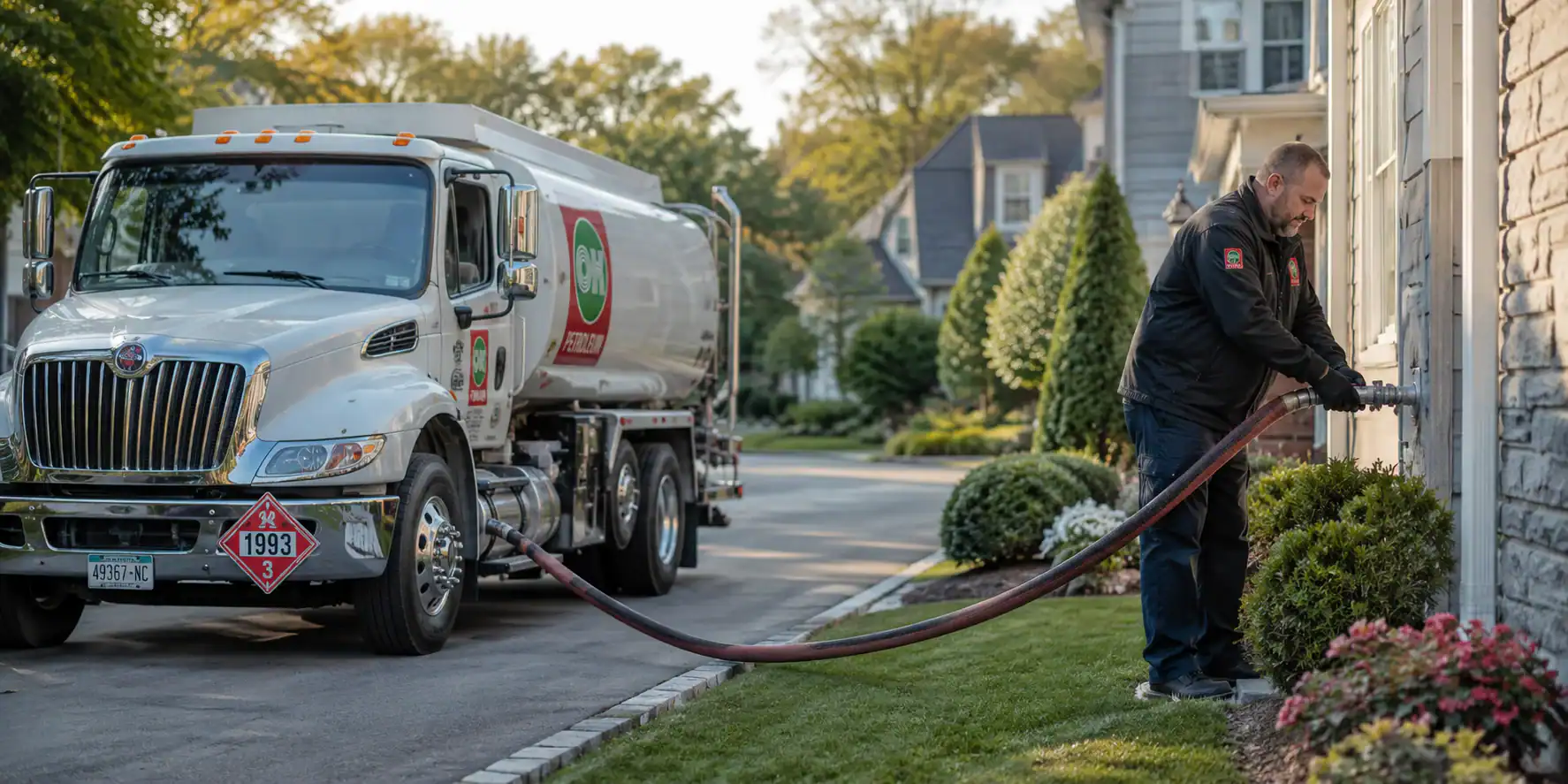
Proximity to supply terminals is one of the most direct variables. A company operating closer to a wholesale terminal has lower transportation costs, which can translate into a lower per-gallon price for customers. It can also mean faster, more reliable delivery — especially during high-demand periods when logistics are stretched. These aren't abstract advantages; they affect both the price on your invoice and whether your tank gets filled on time when everyone else is calling at once.
Fleet size and operational efficiency matter too. A company running a larger, well-maintained fleet across a defined service area can spread fixed costs over more deliveries, which helps keep per-delivery costs down. A smaller or less organized operation may charge more simply because its cost structure requires it — and that difference gets passed directly to the customer.
This is also where hidden fees tend to live. Delivery surcharges, minimum order requirements, credit card processing fees, and "operations costs" added on top of the quoted per-gallon price are all distribution-side charges that some companies bury in the fine print. The quoted price per gallon is not always the total cost of the transaction, and Nassau County homeowners who've been surprised by their final invoice know exactly what that feels like.
We don't charge hidden fees or require contracts for on-demand service. You can place your order online, specify the exact number of gallons you want, and pay without picking up the phone. No surprises on the invoice, no contract locking you in.
What to Do Before Heating Season Starts
Heating oil prices today are shaped by forces that range from OPEC boardrooms to the forecast for this coming January — and most of it is outside anyone's local control. What you can control is when you order, who you order from, and whether you understand what you're actually paying for.
If you're a Nassau County homeowner, the pre-season window is the most practical time to act. Prices tend to be lower before winter demand sets in, and ordering early gives you options that disappear once the cold arrives.
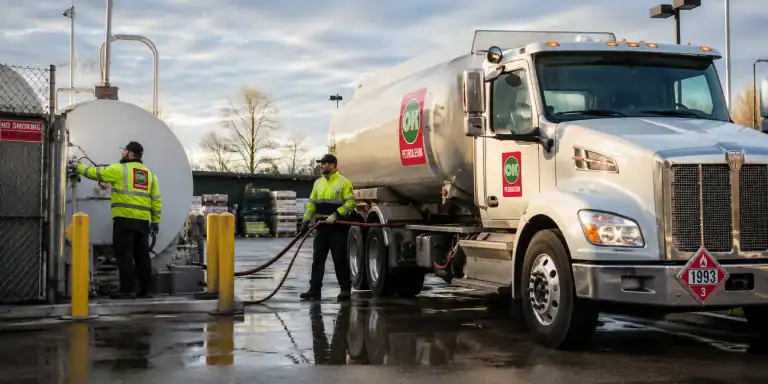
OK Petroleum Distribution has been serving Nassau and Suffolk County homeowners for nearly 50 years. Whether you prefer automatic delivery that monitors your usage and fills your tank before you run out, or on-demand will-call service with no contracts and no extra fees, we're set up to handle both. Reach out to us directly with questions about current heating oil prices or to place an order — we'll give you a straight answer.