


You checked the gauge. The needle is sitting somewhere between a quarter and empty, and there's a nor'easter in the forecast. Now you're doing the math in your head — how much oil is actually left, how cold it's going to get, and whether anyone can get a truck to your house before the storm rolls in.
This is a situation Nassau County homeowners know well. And if you've been through it once, you know the worst part isn't the cold — it's not knowing whether you waited too long to call. This guide gives you a clear picture of what to do, when to do it, and how to make sure you're never racing the weather again.
Heating Oil Delivery Today: What the Clock Actually Looks Like Before a Storm
When a major storm is forecast for Long Island, delivery windows fill up fast. We field a surge of calls from homeowners who all had the same thought at the same moment — and our trucks can only cover so many stops before road conditions make it impossible to run more routes.
The practical reality is that "same-day delivery" before a storm means calling early. Not the morning of. Not when the snow starts. If a storm is 48 hours out, that's your window. By the time it's 24 hours out, you may be looking at next-day delivery at best — and during a serious nor'easter, "next day" can stretch further than that.
Why Your Tank Gauge Is Probably Misleading You
Here's something most Nassau County homeowners don't know until they've run out once: on a standard 275-gallon residential oil tank — the kind sitting in basements all across Levittown, Wantagh, Merrick, and Bellmore — a gauge reading of "1/4 full" means you have roughly 69 gallons left. That sounds like a reasonable cushion. It isn't.
The reason is the shape of the tank itself. Because of the rounded bottom, the gauge drops from a quarter to empty faster than it drops from half to a quarter. The last quarter of your tank drains more quickly than any other portion. So if you've been watching the needle and thinking "I'll order when it hits a quarter," you're already in the danger zone by the time you make that call.
The smarter habit is to order when the gauge hits a quarter — not to wait until it does and then start thinking about it. On a cold January week with temperatures in the twenties, a 275-gallon tank can burn through 5 to 10 gallons a day. That 69-gallon buffer can disappear in less than two weeks under sustained cold, and even faster if your home is larger or older.
Nassau County's housing stock skews heavily toward post-war Cape Cods, split-levels, and ranch homes — most of them built around the mid-1950s, when oil-fired heating was simply what you put in a new house. These homes are well-loved, but they're not always the most efficient. Older windows, less insulation, and aging boilers mean they burn through oil faster than a newer build would. If you're in one of these homes — and statistically, most Nassau County homeowners are — your consumption rate in deep winter is probably higher than you'd expect.
The bottom line: don't trust the gauge to give you a comfortable warning. Trust the math, and order before you think you need to.
What to Do If You've Already Run Out of Heating Oil
If you're past the point of low-tank anxiety and the heat has actually stopped, the first thing to know is that this is fixable — and it doesn't require waiting hours in a cold house if you move quickly.
The immediate bridge measure that the heating oil industry recommends is adding 5 to 10 gallons of diesel fuel to your tank. Diesel and No. 2 heating oil are chemically close enough that diesel will run your burner without damaging anything. You can pick it up at any gas station with a portable fuel container. This isn't a long-term solution, but it's enough to get your heat running again while you wait for a full delivery.
Once you've added the diesel, you'll need to restart your burner. Most residential oil burners have a reset button — typically a red button on the burner itself or on the relay box mounted nearby. Press it once. If the burner fires, you're good. If it doesn't restart after one attempt, don't keep pressing it. At that point, it's worth calling a technician, because repeated reset attempts can flood the combustion chamber.
The reason the restart step matters is that when a tank runs completely dry, air gets pulled into the fuel line. The system shuts itself off as a safety measure, and it won't restart automatically even after you've added fuel. You have to manually clear that lockout condition with the reset button.
One other thing worth knowing: running a tank completely dry can stir up sediment that settles at the bottom over years of use. That sediment can clog filters and nozzles. It doesn't happen every time, but if your system runs dry and then starts acting sluggish or cycling off after the restart, a clogged filter is a likely culprit. A technician can swap it out quickly, but it's good to know this can happen so you're not caught off guard.
The short version: add diesel, press reset once, and call for an emergency delivery. That sequence handles most no-heat situations.
Emergency Fuel Oil Delivery: How to Get Oil Fast When It Matters Most
When you're in a genuine heating emergency, the most important thing is knowing who to call and what to expect when you do. Not every oil company operates the same way, and in a high-demand period — like the 24 hours before a major Long Island storm — the difference between a company that has supply and one that doesn't matters enormously.
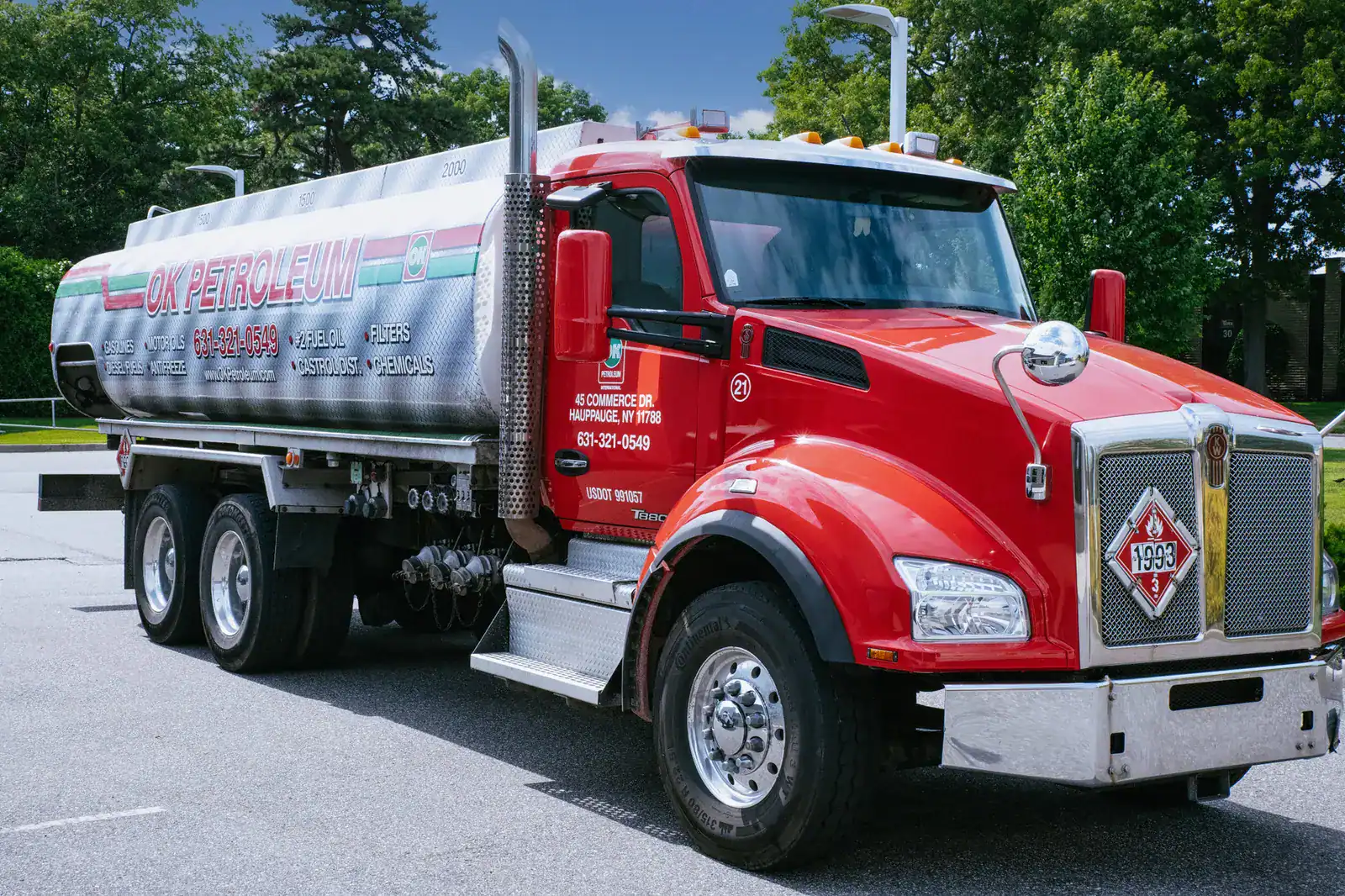
We've been delivering heating oil to Nassau and Suffolk County homes for over 40 years. In that time, we've never run out of oil, and we've never price gouged our customers during emergencies. That's not a marketing line — it's the operating standard we've held to since 1976, through oil crises, supply disruptions, and every nor'easter Long Island has thrown at us.
Next Day Oil Delivery vs. Same-Day: What's Actually Realistic During a Storm
The honest answer is that it depends on when you call and what the roads look like. Same-day delivery is genuinely available — but it requires calling early enough in the day for a truck to be routed to your address before the schedule fills. If you're calling at 7 PM the night before a storm, same-day is likely off the table. Next-day delivery may be your realistic option, and that's still a workable outcome if you have enough oil to get through the night.
This is exactly why the 48-hour window matters so much. When a storm is forecast two days out, same-day and next-day slots are still open. By the time the storm is 12 hours away, you're competing with every other homeowner on your block who just had the same realization.
Our on-demand service lets you order exactly the number of gallons you want, pay online or by phone, and get a delivery scheduled without signing any contracts or committing to anything beyond that single order. There are no extra fees attached to the on-demand model — you pay for the oil, and that's it. For homeowners who prefer to stay in control of their own ordering, this is the straightforward option.
That said, there's a meaningful difference in how on-demand customers and automatic delivery customers are handled during high-demand periods. When storms create tight delivery windows and limited truck availability, automatic delivery customers receive priority scheduling. The reason is practical: we're already monitoring their tanks and have their deliveries built into our routing. During a storm surge, that pre-existing relationship translates to faster service.
If you've ever called for an urgent delivery during a storm and been told the earliest available slot is two days out, it's worth asking whether automatic delivery would have changed that outcome. In most cases, it would have — because you likely wouldn't have needed the urgent call at all.
How Automatic Delivery Actually Works — and Why It Solves the Storm Problem Permanently
Automatic delivery isn't just a scheduled drop-off every few weeks. Our system uses a computer model that tracks your home's consumption based on weather patterns, your historical usage, and degree-day calculations — essentially, how hard your heating system has to work given the outdoor temperature. When the model projects that your tank will reach a certain level, a delivery gets scheduled before you get there.
The practical result is that you stop thinking about your oil tank. You don't check the gauge before a storm. You don't do mental math about how many gallons you have left versus how cold it's going to get. The system handles it, and a truck shows up before you ever need to call.
For Nassau County homeowners with the kind of schedule that has you leaving for the LIRR before 7 AM and getting home after dark, this matters more than it might seem. A lot of tank runouts happen because people simply don't have time to monitor things that aren't actively demanding their attention. The gauge doesn't send you an alert. The burner doesn't warn you a week in advance. Automatic delivery closes that gap entirely.
There's also the storm-prep dimension specifically. When a nor'easter is forecast and everyone on your street is calling their oil company at the same time, automatic delivery customers aren't in that queue. Their tanks have already been topped off based on the weather forecast — because the consumption model factors in incoming cold. That's the difference between watching the storm from a warm house and scrambling to find a delivery slot.
We offer automatic delivery alongside our on-demand will-call service, so you're not forced to choose one model forever. If your situation changes — you travel more, your household grows, your consumption patterns shift — the delivery approach can shift with it. The goal is that you never run out of oil. That's been our standard for over four decades, and automatic delivery is the most reliable way we know to keep it.
Getting Heating Oil Before a Storm in Nassau County: The Short Version
If a storm is coming and your tank is low, call now — not when the snow starts. The 48-hour window before a major nor'easter is when delivery slots are still available and trucks can still reach your neighborhood reliably. Check your gauge, remember that a quarter-tank on a standard 275-gallon tank means roughly 69 gallons, and don't wait for the needle to hit empty before you act.
If you've already run out, add 5 to 10 gallons of diesel from a nearby gas station, press the reset button on your burner once, and call for an emergency delivery. That sequence handles most situations.
And if you're tired of doing this math every winter — if you'd rather just have heat and not think about it — automatic delivery is the answer. We've been serving Nassau County homes since 1976 without ever running out of oil or raising prices on customers in a pinch. If you need oil today or want to stop worrying about it going forward, call us at (631) 321-0549 or place your order online.