



If you own a home in Nassau County, NY, you already know that heating oil costs can feel like a moving target. Prices shift with the seasons, with global crude markets, and sometimes — it seems — for no clear reason at all. That uncertainty is frustrating, especially when you're trying to budget for the winter ahead.
This breakdown is meant to cut through the noise. We'll cover what Nassau County homeowners are actually paying per gallon right now, what's driving those prices, and how heating oil compares to propane and natural gas when you do the math correctly. No fluff, no scare tactics — just the numbers and context you need.
What Nassau County Homeowners Are Paying for Heating Oil Right Now
Heating oil prices in Nassau County, NY typically range from $3.15 to $3.45 per gallon, depending on your delivery address, how much you order, and how you pay. That range can shift quickly — the national average hit $4.46 per gallon in March 2026, up sharply from around $3.60 per gallon just weeks earlier, largely driven by geopolitical tension in global oil markets.
For context, that $3.15–$3.45 Nassau County range looks competitive against national benchmarks. But the per-gallon price you see quoted isn't the whole story. What you actually pay depends on your delivery model, whether you're locked into a contract, and how close your supplier is to a wholesale terminal.
What Makes Heating Oil Prices Rise and Fall in Nassau County
The U.S. Energy Information Administration breaks the retail price of heating oil into three components: crude oil accounts for roughly 53% of what you pay per gallon, refining makes up about 15%, and distribution and marketing cover the remaining 32%. That last third — distribution and marketing — is where local suppliers like us have the most influence over your final price.
Crude oil is the biggest variable. When global markets tighten, your heating bill follows. That's why prices can jump 80 cents per gallon in a matter of weeks, as they did in early 2026. It's not your supplier gouging you — it's the upstream market reacting to events halfway around the world.
What we control is that 32% slice. Proximity to a wholesale terminal matters. Delivery route efficiency matters. Whether we're passing on a third-party aggregator commission matters — some comparison sites quietly add a per-gallon fee that gets buried in your quoted price without you ever knowing it.
Nassau County's post-World War II housing stock is another factor worth understanding. A large share of homes in Bellmore, Baldwin, and Plainview were built in the 1940s through 1970s, before natural gas infrastructure was widely available. Many of those homes were never connected to a gas line and can't be easily converted without significant cost. That's part of why approximately 59% of Long Island homes still run on heating oil — one of the highest concentrations anywhere in the country. Demand here is structural, not just seasonal.
Seasonality still plays a real role, though. Prices tend to rise in late fall as demand picks up and ease off in late spring. Homeowners who prepay or lock into a budget plan during the summer sometimes capture lower per-gallon rates before winter demand pushes prices higher. Whether that strategy makes sense depends on where crude markets are heading — which nobody can predict with certainty.
Why Heating Oil Prices Vary So Much Between Suppliers in Nassau County
Here's something most people don't realize: two suppliers serving the same ZIP code in Nassau County, NY can quote prices that differ by 30 cents or more per gallon. The fuel itself is standardized — New York State requires all heating oil sold in Nassau County, Suffolk County, New York City, and Westchester to meet B5 BioHeat specifications, meaning every delivery already contains a 5% biodiesel blend. You're not getting different fuel from different suppliers. You're getting different pricing structures.
That gap comes from a few places. Some companies build delivery fees, service charges, or contract administration costs into the per-gallon price without itemizing them. Others require you to sign a price-cap contract, which can backfire badly if crude prices drop after you've locked in — some Nassau County homeowners have ended up paying $0.60 to over $1.50 per gallon more than the going market rate because of exactly this scenario.
Delivery model also affects your effective cost. Automatic delivery programs use degree-day calculations and your usage history to predict when your tank needs filling, which reduces the risk of running out but can sometimes result in deliveries you didn't expect. Will-call service — where you order when you decide — gives you full control over timing and quantity, but requires you to stay on top of your tank level.
The cleanest setup for a cost-conscious Nassau County homeowner is a supplier that offers both options, charges no extra fees on will-call orders, and doesn't require a contract. That combination lets you order on your schedule without paying a premium for the flexibility.
Is Fuel Oil Cheaper Than Propane? The Real Comparison
At first glance, propane often looks like the cheaper option because the per-gallon price is lower. But that comparison only holds if both fuels delivered the same amount of heat per gallon — and they don't.
Heating oil delivers approximately 138,500 BTUs per gallon. Propane delivers around 91,500 BTUs per gallon. That means you need roughly 1.5 gallons of propane to produce the same heat output as one gallon of heating oil. Once you adjust for that difference, the cost comparison shifts significantly.
Is Oil or Propane Cheaper to Heat With? The Math That Actually Matters
The right way to compare heating fuels isn't price per gallon — it's price per usable BTU. A gallon of propane at $2.90 sounds cheaper than heating oil at $3.45. But when you account for the fact that oil contains about 1.5 times more energy per gallon, the math changes quickly.
At those prices, heating oil at $3.45 per gallon delivers roughly 138,500 BTUs, which works out to about $0.0000249 per BTU. Propane at $2.90 per gallon delivers 91,500 BTUs, working out to about $0.0000317 per BTU. That makes heating oil the more cost-effective option at those price points, even though propane costs less per gallon on its face.
Modern propane furnaces and boilers often carry higher AFUE efficiency ratings than older oil systems — sometimes up to 98%. If your oil heating equipment is aging and running at lower efficiency, that gap narrows. Equipment age and condition matter as much as the per-gallon price.
Propane also requires a storage tank on your property, typically either owned or leased from your supplier. That's an added cost and a logistical consideration that doesn't apply to heating oil. In Nassau County, NY, where most oil-heat homes already have an existing tank and system in place, switching to propane means upfront conversion costs on top of the ongoing fuel expense.
The honest answer is that neither fuel is universally cheaper — it depends on current market prices, your equipment's efficiency, and your specific usage. The per-gallon comparison alone will almost always mislead you.
Is Oil or Gas Heating Cheaper for Nassau County Homes?
Natural gas is generally cheaper per BTU than heating oil — the gap typically runs between 40% and 60% depending on where crude oil prices are sitting. At current Nassau County, NY rates, switching from oil to gas could save a homeowner in a typical 2,000-square-foot home roughly $1,450 per year. That's a real number and it's worth taking seriously.
But that savings figure assumes you can actually access natural gas — and a significant portion of Nassau County homes can't. Many streets in older residential neighborhoods never had gas lines run to them. If your home isn't connected to the municipal gas grid, the conversion cost involves not just swapping out your heating system but potentially paying for a new gas service line, which can be expensive and isn't always available regardless of budget.
For homes that do have gas access, the math on switching depends on conversion costs versus annual savings. At roughly $1,450 per year in savings, a conversion that costs $7,000 to $10,000 out of pocket pays for itself in five to seven years — potentially faster with state rebates or federal tax credits. That's a reasonable investment if you're planning to stay in the home long-term.
For the large share of Nassau County homeowners who don't have gas access, heating oil remains the practical primary option. The focus then shifts from "should I switch fuels?" to "am I getting the best possible deal on the fuel I already use?" — which brings you back to delivery model, contract terms, and supplier transparency.
Every gallon of heating oil delivered in Nassau County, NY already contains 5% biodiesel under New York State's B5 BioHeat requirement. You're already using a cleaner fuel blend than most people realize, without paying extra for it.
Getting a Fair Price on Heating Oil Delivery in Nassau County
The cost of home heating oil in Nassau County, NY in 2026 sits in the $3.15 to $3.45 per gallon range — competitive relative to national averages, but still subject to the same crude oil volatility that affects every market. Understanding what drives that price, how it compares to propane and gas on a per-BTU basis, and where the hidden costs in your delivery arrangement might be hiding puts you in a much stronger position as a buyer.
The biggest thing to watch for isn't the headline price — it's the contract terms behind it. No-contract will-call service, transparent per-gallon pricing, and the option to switch between automatic and on-demand delivery without penalty are what separate a supplier worth trusting from one you'll regret signing with.
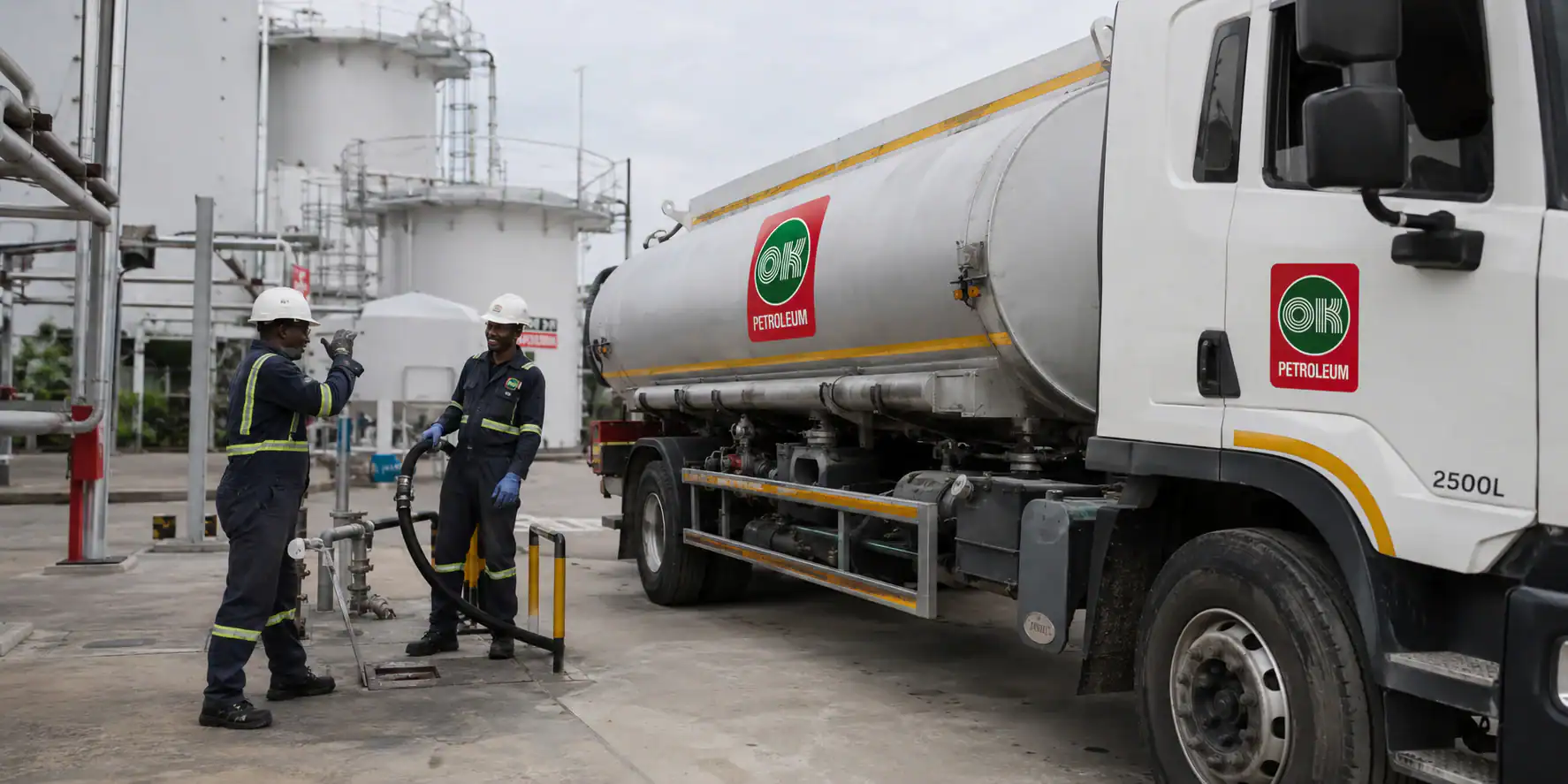
We've been delivering heating oil to Nassau and Suffolk County homes since 1976. We offer both automatic delivery and no-contract will-call service, with online ordering that lets you specify your exact gallons and pay without a phone call. If you want to know what a delivery would cost for your address, reach out to OK Petroleum Distribution at (631) 321-0549 — no pressure, no pitch, just a straight answer.