


Most Nassau County homeowners with oil heat have never given much thought to how the fuel actually gets to their tank. It shows up, the gauge goes up, and life moves on. But when something goes wrong — you run low during a nor'easter, your current company misses a delivery window, or you get a bill that doesn't feel right — suddenly the whole process matters a lot more.
Mobile fuel delivery isn't complicated, but understanding how it works gives you real leverage: over your costs, your schedule, and who you trust with something as essential as keeping your home warm. Here's what you should know.
How Mobile Fuel Delivery Works
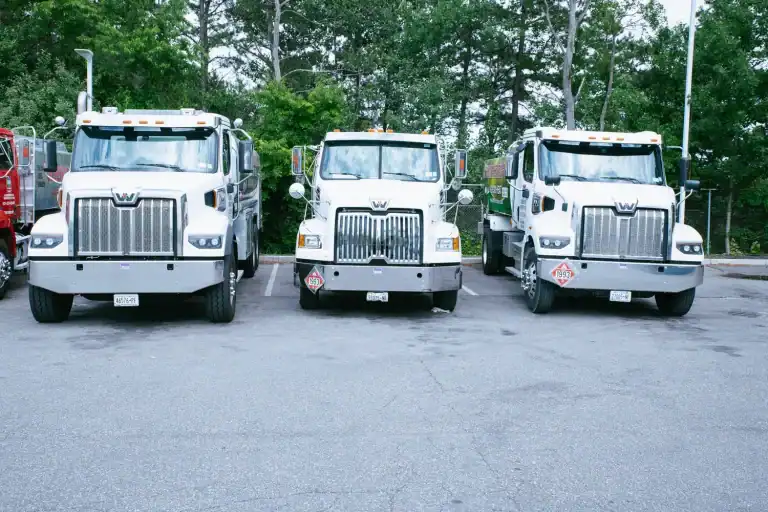
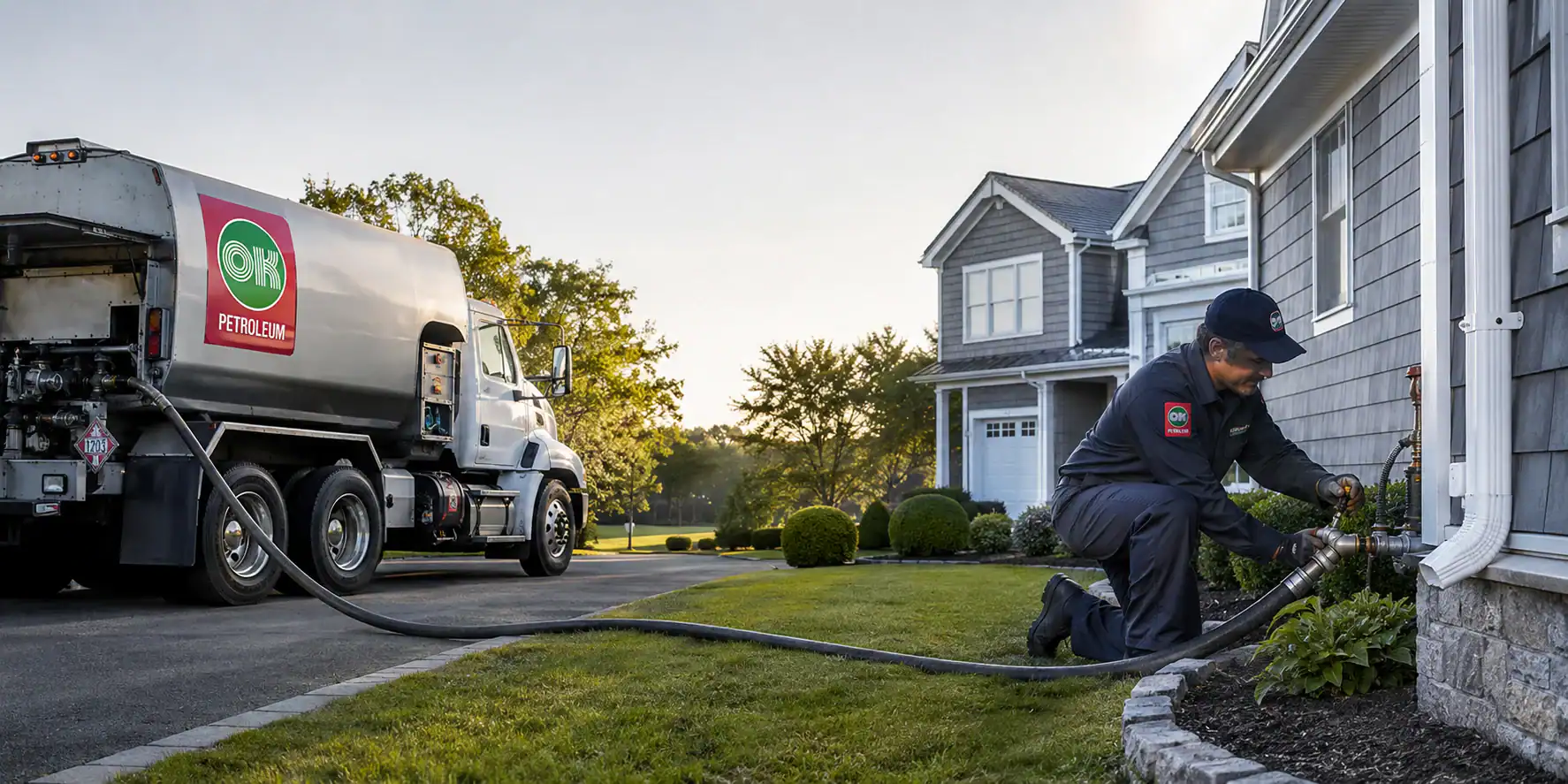
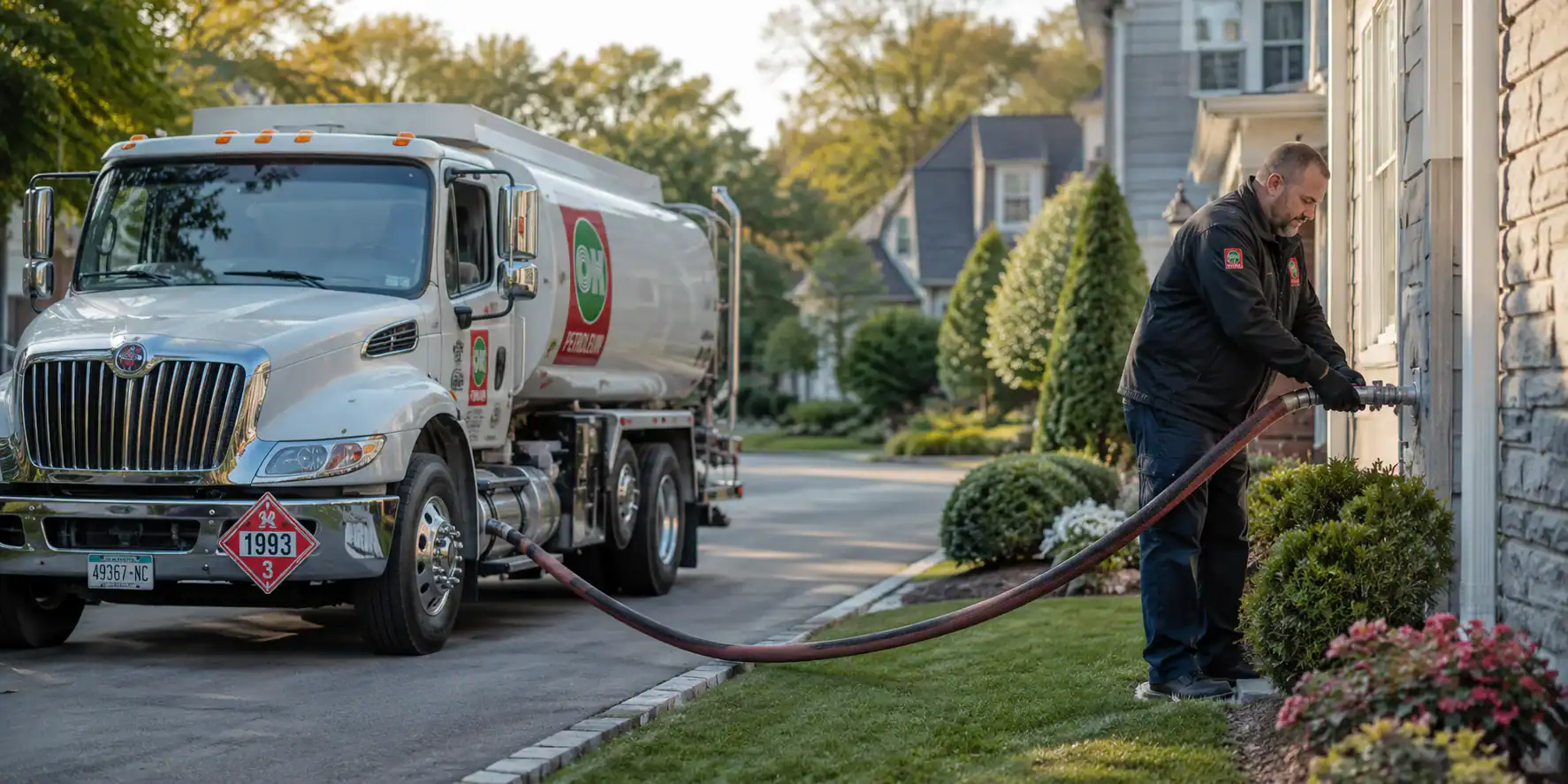
At its core, mobile fuel delivery means a certified tanker truck comes to your property and transfers fuel directly into your storage tank — whether that's a residential heating oil tank in your basement or an above-ground diesel tank at a job site. You don't go to the fuel. The fuel comes to you.
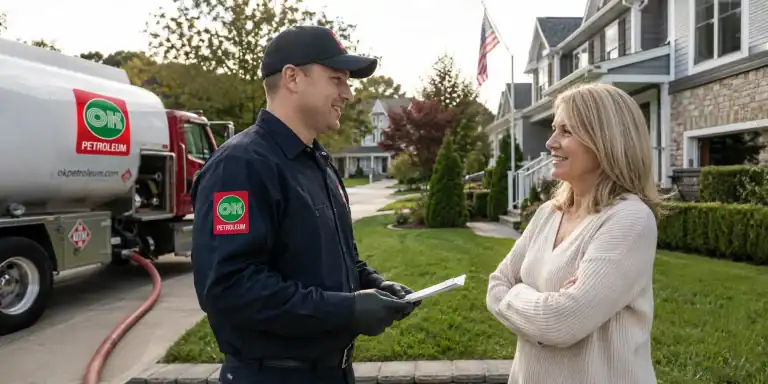
The process starts with an order, either placed online, through a mobile app, or by phone. You specify what you need — fuel type, quantity, and a delivery window — and a truck is dispatched to your address. On arrival, the driver connects to your fill pipe, meters the delivery, and leaves a ticket showing exactly how much was delivered and at what price. In New York, that metered receipt isn't optional — it's legally required, and any reputable provider will hand one over without being asked.
Automatic vs. On-Demand Delivery in Nassau County
This is where most Nassau County homeowners get confused — and where the choice you make can actually affect how much you spend each heating season.
There are two fundamentally different ways to receive fuel delivery, and they serve two very different types of customers. Automatic delivery uses a computer model that tracks your household's fuel consumption patterns — factoring in things like weather, your home's size, and your usage history — and schedules a delivery before your tank drops to a critical level. You don't have to think about it. The truck shows up before you run out, and that's the whole point. For busy households where no one is monitoring the tank gauge, or for people who travel frequently, it's a genuinely hands-off solution.
On-demand delivery — sometimes called will-call — works the other way. You watch your gauge, decide when you want fuel, and place an order on your own timeline. You can specify exactly how many gallons you want, which gives you direct control over what you're spending. There's no contract, no minimum commitment, and no extra fees for ordering this way.
Here's the trade-off that most companies don't explain clearly: industry data puts the per-gallon premium for automatic delivery at roughly $0.40 to $0.50 more than will-call pricing. For a Nassau County home that burns through 800 to 1,000 gallons over a heating season, that difference adds up to somewhere between $400 and $500 annually. That's not a small number. For homeowners who are comfortable keeping an eye on their tank and placing an order when it hits around 25 to 30 percent capacity, on-demand delivery is almost always the more cost-effective choice.
That said, automatic delivery has real value for the right customer. If you've ever come home to a cold house because you forgot to check the gauge, or if you'd simply rather not think about it, the premium may be worth every cent. The key is knowing the difference exists — and choosing the model that actually fits your life, not just defaulting to whatever your current company set you up with years ago.
We offer both options, with no contracts required on either. That's not the norm in this industry, and it matters.
What Makes a Trustworthy Fuel Delivery Provider
Not every fuel delivery company operates the same way, and in New York, the gap between a well-run operation and a poorly managed one is wider than most people realize. A 2026 investigation found that 55% of fuel oil delivery companies in the New York area had at least one truck inspection failure over a two-year period, and that roughly one in every ten trucks inspected failed calibration checks. That's a significant number when you consider that the accuracy of your delivery ticket depends entirely on the truck's metering equipment being properly calibrated.
What that means practically: if you're ordering 150 gallons and paying for 150 gallons, you should be getting 150 gallons. A calibration failure means you might not be. New York law requires a metered delivery ticket on every delivery — a document showing the exact quantity delivered and the price per gallon. If a company can't produce that, or if the numbers on your ticket don't add up, that's a problem.
Beyond calibration, the markers of a trustworthy provider are mostly common sense: they've been around long enough to have a track record, they're transparent about pricing before you commit, they show up when they say they will, and they don't make you feel like you're locked in. A BBB A+ rating is a meaningful signal here — it reflects a company's commitment to resolving complaints and operating with integrity, not just a self-reported claim.
We've been delivering fuel to Long Island homes and businesses since 1976. That's over 45 years of showing up on time, metering every delivery accurately, and not price gouging during cold snaps — something we're straightforward about because it's a real concern for Nassau County homeowners every time a nor'easter rolls through and demand spikes overnight.
Diesel Delivery for Nassau County Businesses
Residential heating oil gets most of the attention, but mobile fuel delivery for commercial diesel is an entirely different conversation — and one that's increasingly relevant for Nassau County contractors, fleet operators, landscapers, and property managers.
On-site diesel delivery means a tanker comes to your location — a job site off the Seaford-Oyster Bay Expressway, a fleet yard near Farmingdale, a commercial property in Hempstead — and fuels your equipment directly. No driving to a pump, no downtime between jobs, no managing fuel cards across multiple drivers. The fuel is there when the workday starts.
Cheapest Diesel Fuel Near Me: How On-Demand Delivery Keeps Costs Down
Price is usually the first question commercial customers ask, and it's a fair one. Diesel costs add up quickly when you're running a fleet or keeping heavy equipment fueled across multiple Nassau County sites.
The on-demand model works in your favor here. Rather than being locked into a fixed-rate contract or a supplier relationship where the pricing isn't transparent until the invoice arrives, will-call diesel delivery lets you order when you need it, in the quantity you need, at the current market rate. You're not subsidizing a supplier's overhead or paying a premium for a service tier you didn't choose. You order, you receive, you pay for what was delivered — and a metered ticket confirms every gallon.
It's also worth understanding what you're actually buying. Ultra-Low Sulfur Diesel — ULSD — is the current EPA and New York State standard for on-road diesel, and it's what any legitimate supplier should be delivering for vehicles and equipment that operate on public roads. We deliver ULSD that meets ASTM D975 specification, which is the industry quality standard for diesel fuel. If a supplier can't tell you what spec their diesel meets, that's a gap worth pressing on before you commit.
For Nassau County businesses that also heat a facility with oil, there's a practical advantage to working with a supplier who handles both. Heating oil and No. 2 diesel are chemically very similar — both are middle distillates — and sourcing both from a single provider simplifies your accounts, your scheduling, and your relationship with one less vendor to manage. We deliver heating oil, diesel, gasoline, and kerosene, which means commercial customers don't have to piece together multiple supplier relationships to keep everything running.
Nassau County's commercial activity — construction along the Southern State Parkway corridor, landscaping operations across the mid-island communities, fleet yards near Sunrise Highway — creates consistent diesel demand year-round. Summer doesn't slow it down the way residential heating oil does. If your operation depends on diesel, having a reliable on-site delivery relationship in place before your busiest season is worth doing sooner rather than later.
Mobile Fuel Delivery FAQs for Nassau County
**Do I need to be home when the delivery happens?**
In most cases, no. Fuel is delivered to your outdoor fill pipe, which is accessible without anyone needing to be present. This is one of the features that makes mobile delivery genuinely practical for Nassau County's commuter population — if you're on the LIRR heading into the city, your tank can be filling while you're on the train. You'll receive a delivery ticket confirming what was delivered, and you can pay online before or after. The main exception is if there's a gate, a locked enclosure, or some other access issue — in those cases, a quick heads-up to us solves it.
**How long does a delivery take, and how far out do I need to schedule?**
The delivery itself is typically a matter of minutes once the truck is on-site. Scheduling lead time depends on the season and demand. During peak heating months — January and February especially — Nassau County demand is high, and same-day availability can tighten up. Planning ahead by a few days during the coldest stretches is worth doing. Nassau County's suburban density actually works in your favor logistically: our trucks can cover more stops per route here than in more rural parts of Long Island, which generally means tighter delivery windows and more scheduling flexibility than customers in outlying areas experience.
**What's the minimum order quantity?**
This varies by provider. For homeowners, it's common to order a partial fill rather than a full tank — especially if you're on a budget and want to control your spending precisely. Our online ordering system lets you specify the exact number of gallons you want, so you're not forced into a minimum that doesn't fit your situation.
**Can I get both heating oil and diesel delivered by the same company?**
Yes — and for Nassau County properties that use both, it's worth consolidating if you can. Managing one delivery relationship instead of two is simpler, and a supplier who knows your property and your usage patterns is more useful than two separate vendors who don't have the full picture.
**What payment options are available?**
We offer prepayment, budget plans, and price protection plans in addition to standard online payment. If locking in a rate before winter matters to you — and for many Nassau County homeowners watching oil markets, it does — a budget or price protection plan is worth asking about before the heating season starts.
Ready to Set Up Fuel Delivery in Nassau County, NY?
Mobile fuel delivery isn't complicated once you understand how it works — and knowing the difference between automatic and on-demand delivery, what a metered receipt should look like, and what to expect from a reliable provider puts you in a much better position than most people who just inherited their current oil company by default.
If you're a Nassau County homeowner who wants more control over your fuel costs, or a business operator who needs reliable on-site diesel without the contract headaches, the process starts with a simple order. No long commitments, no guesswork about what you're getting.
OK Petroleum Distribution has been delivering fuel to Long Island homes and businesses since 1976. Reach out at (631) 321-0549 or order online — and specify exactly what you need.