


If you own a home in Nassau County, there's a good chance your basement has an oil burner that's been quietly doing its job for decades. And there's also a good chance someone — a neighbor, a contractor, maybe an ad — has recently suggested you should switch to gas. Maybe you're curious. Maybe you're skeptical. Maybe you just want someone to lay it out straight without trying to sell you something.
That's what this is. We're going to walk through the real comparison — cost, efficiency, lifespan, environmental impact, and what conversion actually involves — so you can decide what makes sense for your home.
Gas Versus Oil Heat: What the Price-Per-Gallon Comparison Misses
The most common argument for switching to gas goes something like this: gas is cheaper per unit, so gas wins. But that comparison only holds up if you're measuring the same thing — and you're not.
Heating oil delivers approximately 138,500 BTUs per gallon. Natural gas delivers around 100,000 BTUs per therm. That means heating oil carries roughly 40% more heat energy per unit than gas. When you account for that difference, the apparent price gap between the two fuels narrows considerably.
That doesn't mean oil is always cheaper. Some years it is, some years it isn't. But the honest answer is that the per-gallon number alone doesn't tell you what your heating bill will actually look like — and any comparison that skips the BTU math is leaving out something important.
Oil Heating vs. Gas Heating: How Efficiency and Equipment Lifespan Factor In
Efficiency ratings matter here too. Modern oil furnaces run at 80% to 90% AFUE — meaning 80 to 90 cents of every dollar you spend on fuel actually heats your home. Gas furnaces can reach 89% to 98% AFUE, so they do have an edge on the efficiency side. That's a real difference, and it's worth acknowledging.
What often gets glossed over, though, is how long the equipment lasts. Oil furnaces, when properly maintained, can run for up to 30 years. Gas furnaces typically last 10 to 15 years. For a Nassau County homeowner with a 12-year-old oil system that's still running well, converting to gas doesn't just mean paying for the conversion — it means replacing equipment that has years of useful life left, and starting a new depreciation clock on a system that will likely need replacing again before your oil furnace would have.
That lifespan gap is rarely mentioned by conversion contractors, for obvious reasons. But it's a real part of the financial picture. A furnace that lasts 30 years instead of 15 cuts your long-term replacement costs in half, even before you factor in what the conversion itself would cost you upfront.
There's also the question of what kind of relationship you want with your fuel supplier. Gas customers in Nassau County are served by National Grid — one utility, one price, no shopping around. Oil customers can compare prices across multiple suppliers, order on demand, switch providers without penalty, and take advantage of competitive pricing in a way that gas customers simply cannot. That market dynamic is a genuine, ongoing benefit of staying on oil that tends to disappear from the conversation the moment a conversion contractor shows up.
What Oil-to-Gas Conversion Actually Costs on Long Island — and What That Means for Your Decision
Here's the number that tends to reframe the entire conversation: converting from oil to gas in Nassau County typically costs between $6,000 and $20,000. That range covers connecting to the street gas line, removing the old oil tank, installing a new furnace or boiler, lining the chimney, and pulling the necessary permits. Most full conversions on Long Island land somewhere in the $9,000 to $18,000 range before any rebates or credits are applied.
At current energy prices, the typical payback period — meaning how long it takes for gas savings to offset the upfront conversion cost — is estimated at five to seven years. That assumes gas prices stay relatively stable, that you stay in the home long enough to reach the payback point, and that the conversion goes smoothly. None of those are guaranteed.
For many Nassau County homeowners, that math points in a clear direction: if your oil system is in good shape and you're not planning to move, the $6,000 to $20,000 you'd spend on conversion could fund years of competitive oil delivery instead — with no debt, no construction disruption, and no waiting half a decade to break even.
That's not an argument against ever converting. For some homeowners — particularly those with an aging system that's about to need replacement anyway, or those who've confirmed gas is available on their specific street and plan to stay long-term — conversion can make sense. But it's a decision that deserves honest math, not just a neighbor's enthusiasm or a contractor's sales pitch.
The homes most likely to benefit from conversion are those where the oil system is genuinely at end of life, where the homeowner has a long time horizon, and where the full cost of conversion has been realistically estimated. If that's not your situation, staying on oil with a reliable, competitively priced supplier may be the smarter move — financially and practically.
Modern Heating Oil on Long Island Isn't What It Used to Be
One of the most persistent objections to staying on oil is that it's environmentally irresponsible. That objection made more sense 30 years ago. Today, it's largely outdated. New York State now mandates ultra-low sulfur heating oil, and the state is actively transitioning toward B20 Bioheat — a blend of 80% heating oil and 20% biodiesel derived from renewable sources, including agricultural byproducts from New York State farms.
B20 Bioheat reduces sulfur oxide emissions by up to 80%, nitrogen oxide emissions by roughly 20%, and CO₂ emissions by approximately 15% compared to conventional heating oil. That's not a marginal improvement. The fuel being delivered to Nassau County homes today is fundamentally different from what was burning in basements in the 1980s and 1990s.
Bioheat Fuel and the NY State Clean Fuel Credit: What Nassau County Homeowners Should Know
Beyond the emissions reductions, there's a financial incentive tied to Bioheat that most homeowners haven't heard about. New York State offers a Clean Fuel Credit of 20 cents per gallon for homeowners using B20 Bioheat fuel. For a home that uses 750 gallons of heating oil in a given year, that's approximately $150 back on your state income taxes — not a rebate you have to apply for separately, but a direct credit tied to the fuel you're already using.
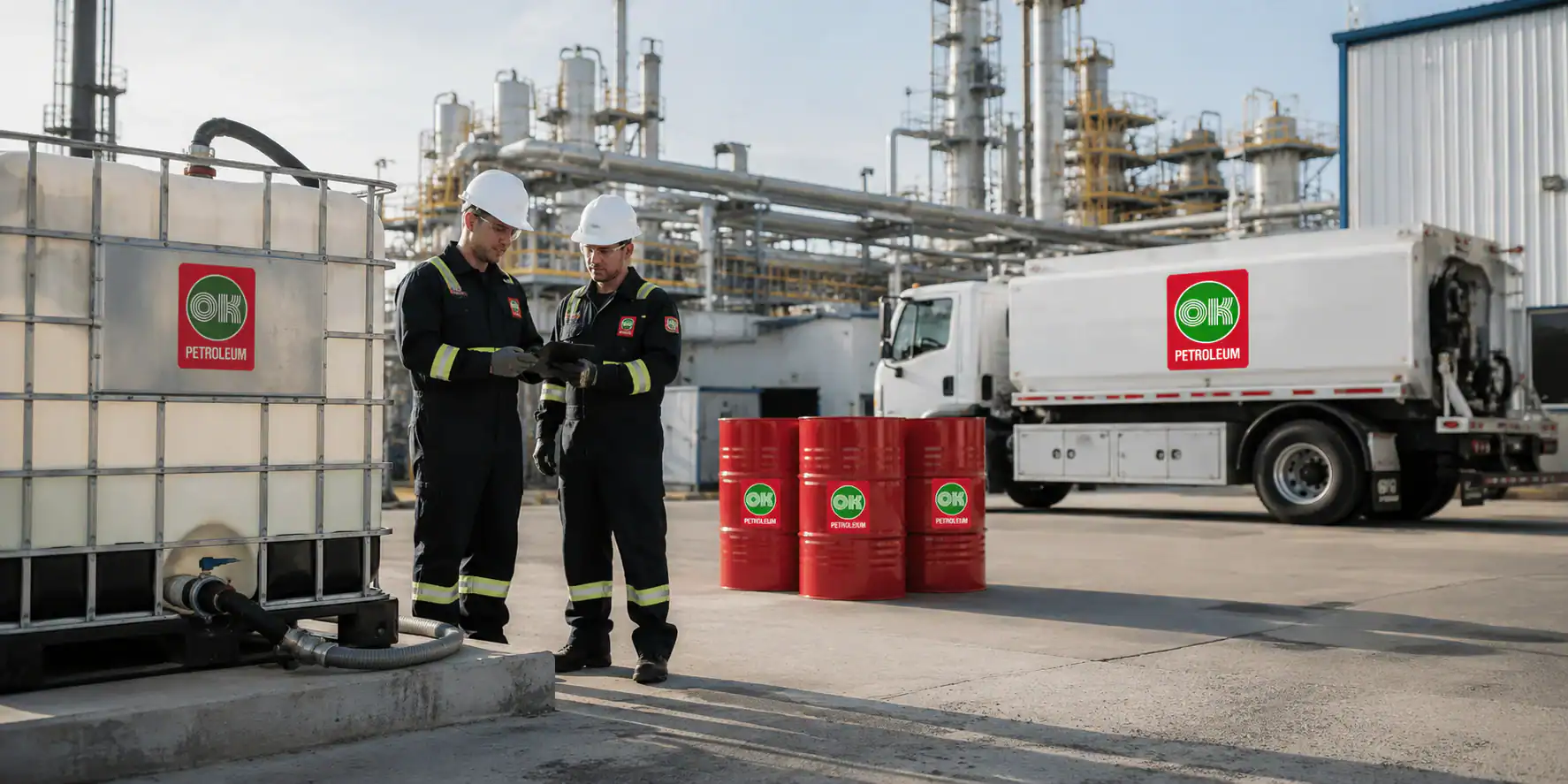
We offer eco-friendly heating oil options, including low-sulfur and biofuel-based blends, for Nassau County customers who want to reduce their environmental footprint without the cost and disruption of a full system conversion. No equipment modifications are needed to use Bioheat — it works in your existing oil system as-is.
There's also a safety dimension to heating oil that rarely gets discussed. Heating oil is not explosive in liquid form. It won't ignite if a match is dropped into it, and it doesn't produce carbon monoxide when it's sitting in your tank. Natural gas, by contrast, is highly flammable, and a gas leak combined with a spark can cause an explosion. Gas furnaces can also produce carbon monoxide silently — which is why gas homes require CO detectors as a matter of course. Neither fuel is dangerous when properly maintained, but the safety profiles are genuinely different, and oil's profile is more forgiving in a storage and handling context.
Over the past three decades, advancements in oil heating technology have led to a 33.6% reduction in home heating oil consumption — meaning modern systems simply use less fuel to deliver the same amount of heat. If you're running an older oil furnace, upgrading to a high-efficiency oil system is often a faster, lower-cost path to reducing both your fuel bill and your environmental impact than converting to gas entirely.
Frequently Asked Questions: Propane, Oil, and Gas Heat on Long Island
**Is propane cheaper than oil for Long Island homes?** In most cases, no. Propane delivers approximately 92,000 BTUs per gallon, compared to heating oil's 138,500 BTUs per gallon. That's a significant energy content gap — roughly 50% less heat per gallon of propane. With current propane prices around $2.90 per gallon, heating oil is generally more cost-effective on a per-BTU basis for Nassau County homeowners. Propane makes the most sense in areas where neither gas lines nor oil delivery infrastructure is accessible — which describes very little of Nassau County.
**Is propane better than oil for home heating overall?** It depends on what you're optimizing for. Propane burns cleaner than conventional heating oil, and it's available in tank form where gas lines don't reach. But for the typical Nassau County homeowner with an existing oil system, propane doesn't offer a compelling advantage over modern Bioheat oil — especially once you factor in the energy content difference and the cost of switching equipment. Like gas customers, propane customers are also locked into a single supplier relationship in most cases, whereas oil customers can shop competitively across multiple providers.
**What about homes in Levittown, Merrick, or Wantagh — does any of this change for older housing stock?** Not substantially. The Cape Cods and ranch homes built across Nassau County in the postwar era were designed around oil heating systems, and most of them still have the infrastructure in place. Gas lines have been extended to much of Nassau County through National Grid, so conversion is physically possible for many of these homes — but the cost-benefit analysis described above applies regardless of the home's age. A well-maintained oil system in a 1950s Levittown Cape can run efficiently for decades with proper annual servicing. The age of the home is less important than the condition and age of the heating equipment itself.
Which Heating Fuel Is Right for Your Nassau County Home?
There's no universal right answer here — and anyone who tells you otherwise is probably selling something. For some Nassau County homeowners, converting to gas makes genuine financial sense. For many others, staying on oil with a reliable supplier and a modern, efficient system is the smarter call — especially when you factor in conversion costs, equipment lifespan, and the competitive advantage of being able to shop your fuel price.
What we'd encourage you to do before making any decision is run the actual numbers for your specific situation: the age and condition of your current system, the full estimated cost of conversion, how long you plan to stay in the home, and what a competitive oil supplier would actually cost you year over year.
We've been delivering heating oil to Nassau and Suffolk County homes since 1976, and we've seen a lot of homeowners make this decision in both directions. If you want to talk through what makes sense for your home — or you're simply ready to get competitive pricing on heating oil delivery — OK Petroleum Distribution is here. Give us a call at (631) 321-0549.