


If you have lived in Suffolk County long enough, you already know what a Long Island winter can do. Temperatures in Hauppauge and Riverhead regularly drop into the low 30s in January, and a nor'easter can roll in fast enough to catch even experienced homeowners off guard. For the roughly 44% of Suffolk County homes that run on heating oil, that means your tank is not just a convenience. It is the reason your house stays livable from October through May.
This guide covers what you need to know before the heating season begins: how to assess your tank, when to order, and how to set up a delivery plan that means you never have to think about it again.
How To Get Your Home Heating Oil Tank Ready Before Winter
The most common mistake Suffolk County homeowners make is not waiting too long to order, but failing to look at their tank at all until something breaks. A tank that looks fine from the outside can still have internal corrosion, sediment buildup, or a blocked vent pipe that causes real problems once you start drawing fuel heavily in December.
Getting ahead of those issues in September or early October is the difference between a routine season and an expensive emergency. Start with the basics: look at the tank for any signs of rust, staining, or moisture around the base. Check that the fill pipe and vent pipe are both clear and unobstructed.
If your tank is more than 15 to 20 years old, it is worth having it professionally inspected before the season starts. You are not paying to fix something that is not broken. You are paying to find out early, when the cost is a fraction of what a leak or system failure can cost you later.
What Happens If You Run Your Oil Tank Too Low
This is one of those things that sounds minor until it happens to you. When a heating oil tank runs completely dry, the burner pulls from the very bottom of the tank, and the bottom of any tank that has been in use for years is where sediment and sludge accumulate. That material gets drawn into the fuel line and can clog the filter, damage the burner nozzle, and cause the system to shut down entirely.
Getting it running again is not just a matter of adding oil. You often need a technician to bleed the line, replace the filter, and prime the system before it will fire. During a cold snap, that service call can take days to schedule. For homes in Bay Shore, Brentwood, Copiague, and Huntington Station, which are areas with a lot of postwar housing stock where tanks are sometimes 30 or 40 years old, this is a real risk.
Older tanks tend to carry more sediment, and they are less forgiving when fuel levels drop too low. The practical rule is to treat a quarter tank as your reorder point, not your emergency threshold. If your gauge reads 1/4, that is the moment to call or place an order, not the moment to wait and see.
There is also the environmental side of this that does not get talked about enough. A tank that has been stressed by repeated low-fuel cycles is more vulnerable to internal corrosion over time. If that corrosion eventually leads to a leak, the cleanup costs are significant. Environmental remediation from a residential oil tank failure in New York can run anywhere from $20,000 to $50,000 depending on how far the contamination spreads. That is what NYSDEC data and remediation contractors consistently report. Keeping your tank in good shape and your fuel level reasonable is the cheapest insurance you have.
When Should Suffolk County Homeowners Order Heating Oil?
Timing matters more than most people realize, and the answer is almost always earlier than feels necessary. Heating oil prices on Long Island follow a predictable seasonal pattern: they tend to be lower in the warmer months when demand is down, and they climb as winter approaches, peaking between December and February when everyone needs delivery at the same time.
In December 2022, prices in the Suffolk County market hit $5.00 per gallon, marking the highest recorded that year. Waiting until you feel cold to order is the most expensive way to manage your fuel. September and October are the sweet spot. Demand has not spiked yet, delivery windows are shorter because routes are not backed up, and you have time to set up your account and delivery preferences without any pressure.
If you are already a customer and have not heard from us about the upcoming season, that is worth noting. A reliable supplier should be reaching out to you, not the other way around. For homeowners in eastern Suffolk, including Riverhead, Southampton, and out toward Shelter Island, this timing matters even more. Many of those communities do not have natural gas pipeline access at all, which means heating oil is not a preference. It is the only practical option.
There is no fallback if a delivery is delayed and the tank runs out. Getting a delivery scheduled before the season peaks is not just smart budgeting. It is basic winter preparedness for a significant portion of the East End.
One more thing worth knowing: New York State requires all heating oil delivered in Nassau and Suffolk Counties to be a B5 biodiesel blend, meaning a minimum of 5% biodiesel mixed in. This is a downstate-specific mandate, and the state is moving toward a higher blend over time. We source compliant fuel from licensed terminals on every delivery.
Automatic vs. Will-Call Heating Oil Delivery: Which Option Is Right For You?
Once your tank is in good shape and you have decided to get ahead of the season, the next question is how you want deliveries to work going forward. There are two models, and they suit very different kinds of homeowners. Understanding the difference takes about two minutes, and picking the right one can change how much mental energy you spend on this every winter.
Neither option requires a contract with us. That is worth saying upfront, because a lot of Long Island homeowners have had bad experiences with escalation clauses and cancellation fees. We do not operate that way.
How Does Automatic Heating Oil Delivery Work?
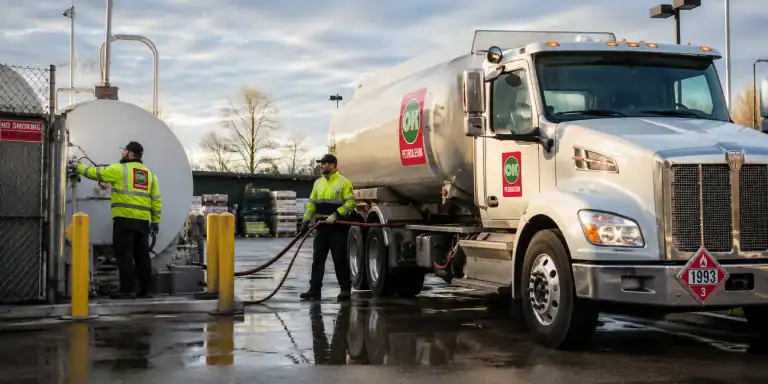
Automatic delivery is what it sounds like: you set it up once, and your tank gets refilled before it runs low, without you having to watch the gauge, make a call, or remember to order. We use consumption modeling to estimate how quickly your household is burning through fuel based on weather conditions and your home historical usage history.
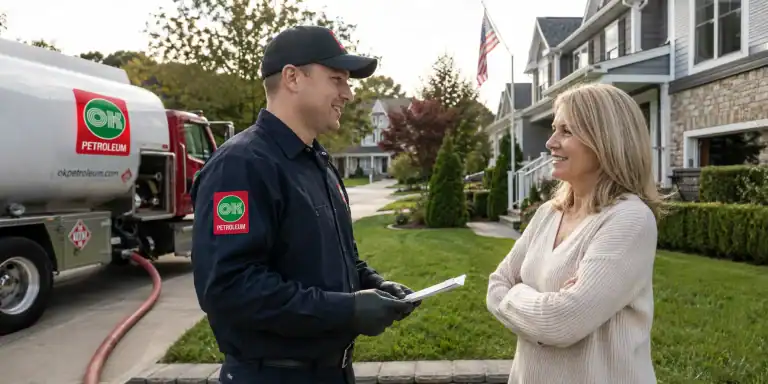
When the model predicts your tank is approaching a reorder point, a delivery gets scheduled automatically. You receive an order confirmation, and the oil shows up. This option works well for homeowners who travel frequently, people who are managing a lot of other things and do not want one more item on their mental list, and anyone who has ever run out of oil before and never wants to deal with that again.
Since we started doing this in 1976, we have never run out of oil to deliver, not during the oil embargoes of the 1970s, not during COVID-era supply disruptions, and not during any nor'easter that has hit Long Island in the nearly 50 years we have been operating. Setting up automatic delivery through us takes about two minutes online. After that, you can log in to pause, adjust, or cancel at any time from your account dashboard. You are not locked in, and you are not handing over control. You are just removing the part where you have to remember to do something.
What Is Will-Call Heating Oil Delivery And Who Should Use It?
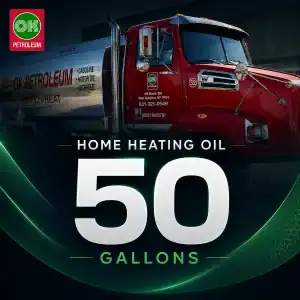
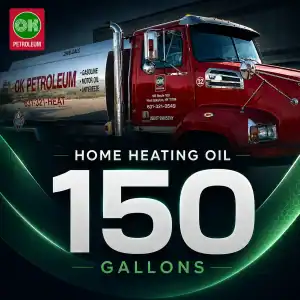
Will-call delivery, sometimes called on-demand or COD delivery, is for homeowners who want to stay in charge of the timing and quantity themselves. You watch your gauge, decide when you want a delivery, and place the order when it works for you. Our online ordering system lets you specify the exact number of gallons you want, anywhere from 50 to 500, and pay online without picking up the phone.
This model makes sense for homeowners who have a good feel for their usage, who like to shop around on price, or who simply prefer to manage things directly. It also works well for seasonal or part-time residents. If you are only at your East End property on weekends or during certain months, automatic delivery based on a full-time usage model does not make sense. Will-call lets you order when you are going to be there.
The thing we hear most often from homeowners who switch from automatic to will-call, or vice versa, is that they did not realize how easy it was to change. There is no penalty, no paperwork, and no conversation you have to have with a customer service department. You just update your preferences.
We serve 130 ZIP codes across Nassau and Suffolk Counties, covering 95 towns on Long Island, so wherever you are, the logistics are already figured out on our end. One practical note: if you are on will-call and you tend to let the gauge drift low before ordering, build in more lead time than you think you need between November and February. That is peak delivery season across Long Island, and even with our infrastructure, as we operate out of our Amityville fuel terminal with routes running across the county, delivery windows during a cold snap are tighter than they are in October. Ordering at a quarter tank gives you a reasonable buffer. Ordering at an eighth is cutting it close.
Finding A Reliable Home Heating Oil Supplier In Suffolk County, NY
Suffolk County winters are long. October through May is a seven-month heating season, and the margin for error in January is basically zero. The homeowners who get through it without drama are the ones who dealt with the small stuff in September: checked the tank, scheduled an inspection, set up their delivery plan, and stopped thinking about it.
If you are evaluating your current supplier or looking to set up service for the first time, the questions worth asking are simple: Have they ever run out of oil? Do they require a contract? Can you order online and specify your own quantity? Are they local, with a terminal and routes in your county, or are they dispatching from somewhere else and hoping for the best?
We are OK Petroleum Distribution, and we have been answering those questions the same way since 1976. We operate out of Amityville with dedicated routes across Suffolk County, and we have never missed a delivery season. If you are ready to get your tank sorted before the season starts, we are easy to reach and straightforward to work with. Reach out to us today or check out our website to schedule your service.