


Your furnace locked out at midnight. You hit the reset button. It fired back up — for a while. Then it happened again. If you've been through that, you probably blamed the oil. Maybe you were right. Maybe you weren't. The truth is, most Nassau County homeowners have never been given a straight answer about what heating oil quality actually means, whether it varies between suppliers, and what's really causing the problems they're seeing. That changes here. By the end of this page, you'll know exactly what to look for — and exactly what questions to ask.
What Is Home Heating Oil — and Is It Really All the Same?
The short answer is no. The longer answer is worth understanding.
All residential heating oil sold in the United States is classified as No. 2 fuel oil and must meet ASTM D396 — the industry's governing standard, which sets limits on sulfur content, water and sediment levels, viscosity, and flash point. So in that sense, every licensed supplier is working from the same rulebook.
But meeting the minimum standard and delivering consistently clean, efficient fuel are two different things. Sulfur content, biodiesel blend percentage, and additive packages all vary between suppliers — and those differences affect how your system runs, how often your filter needs replacing, and how long your equipment lasts.
Domestic heating oil: What the grade designation actually tells you
When someone refers to domestic heating oil, they're almost always talking about No. 2 heating oil — the standard grade used in residential furnaces and boilers across the Northeast. It's a middle distillate fuel, sitting between kerosene (lighter) and industrial fuel oils (heavier), which makes it the right balance of energy density and clean combustion for home use.
One of the most meaningful quality variables within No. 2 heating oil is sulfur content. Older heating oil could contain up to 4,000 parts per million of sulfur. Ultra-low sulfur heating oil — which is increasingly the standard — contains no more than 15 ppm. That's not a small difference. Lower sulfur means cleaner combustion, less residue building up inside your system, and fewer service calls over time. It also means less sulfur oxide going into the air around your home.
Then there's the biodiesel component. In Nassau County, all heating oil sold has been required to contain at least 5% biodiesel — known as Bioheat® B5 — since July 1, 2018. That's not a statewide rule that eventually trickled down to Long Island; Nassau County was ahead of the curve, adopting the requirement years before the rest of New York followed in 2022. The mandate increases to B10 by 2025 and B20 by 2030, so the blend in your tank is going to keep shifting. The good news: oil-fired heating systems use Bioheat® fuel without any modifications. No equipment changes, no service calls to prepare. In fact, biodiesel blends act as a mild solvent that can actually reduce existing deposits in fuel lines over time.
Finally, there are additives. Reputable suppliers add anti-sludge agents, stabilizers, and cleaning compounds at the point of loading. Not every supplier does this at the same level, and the difference isn't visible to you — but it shows up in how your system performs over a season.
Why Nassau County homes are especially vulnerable to fuel quality problems
Here's something worth saying plainly: Nassau County has one of the highest concentrations of oil-heated homes in the country. Roughly 135,208 households — about 28% of all homes in the county — rely on heating oil. During the winter of 2024 alone, 65 million gallons were delivered across Nassau County. That's a lot of fuel moving through a lot of aging systems.
And that's the key word: aging. A significant portion of Nassau County's housing stock dates to the late 1940s and 1950s — the Levittown era, when Cape Cods and ranch houses went up by the thousands across towns like Wantagh, Seaford, Massapequa, and Levittown itself. These homes were built with oil heat as the default, and many of them are still running on the same type of system, sometimes even the same tank, decades later.
Older tanks accumulate sediment. Bacteria can grow in the oil, producing waste that settles at the bottom — what technicians call sludge. It coats the inside of fuel lines, packs into filters, and eventually causes burner lockout. When a delivery truck fills your tank, the incoming fuel stirs up whatever has settled at the bottom. If there's significant sludge down there, it gets suspended in the fresh oil and heads straight for your filter and nozzle.
This is where a lot of homeowners make a critical mistake: they blame the oil company. And sometimes that's fair. But more often, the problem isn't the fuel that just arrived — it's the tank it arrived in. Understanding that distinction matters, because the solution is different depending on which one is actually causing the problem. If your filter keeps clogging, that's a conversation worth having with your supplier before you assume the worst about the fuel itself.
Best price heating oil: What value actually means over a full season
Price per gallon is the number everyone focuses on. It's easy to compare, easy to understand, and easy to use as the deciding factor when you're shopping around. But it's an incomplete picture.
A lower per-gallon price from a supplier delivering higher-sulfur fuel — or fuel without a proper additive package — can translate into more frequent filter replacements, more burner service calls, and reduced system efficiency over the course of a winter. A heating system that runs cleanly and consistently costs less to maintain, even if the fuel itself costs a little more per gallon.
True value includes fuel quality, delivery reliability, and the absence of problems. That's the math most suppliers don't want you to do.
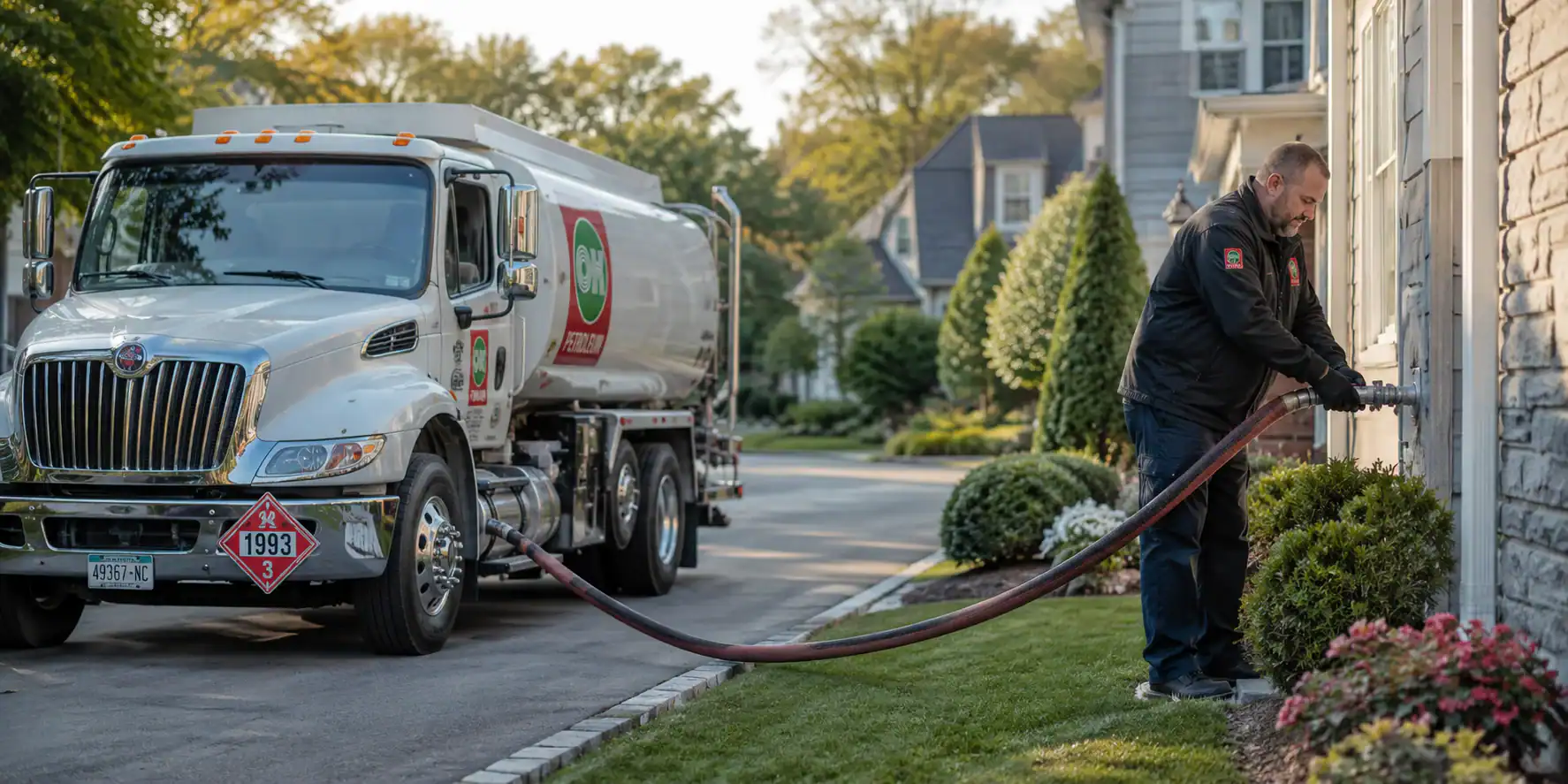
Does consistent delivery actually affect fuel quality in your tank?
This one surprises people, but yes — it does. And it's one of the least-discussed quality benefits of a well-managed delivery schedule.
When your tank runs very low before a refill, a few things happen. First, the fuel pickup tube draws from closer to the bottom of the tank, where sediment naturally accumulates. Second, the incoming delivery hits the tank with more force relative to the remaining fuel, stirring up whatever has settled down there. The result is that a tank that frequently runs near-empty is more likely to send contaminated fuel to your burner than a tank that stays at a healthy level throughout the season.
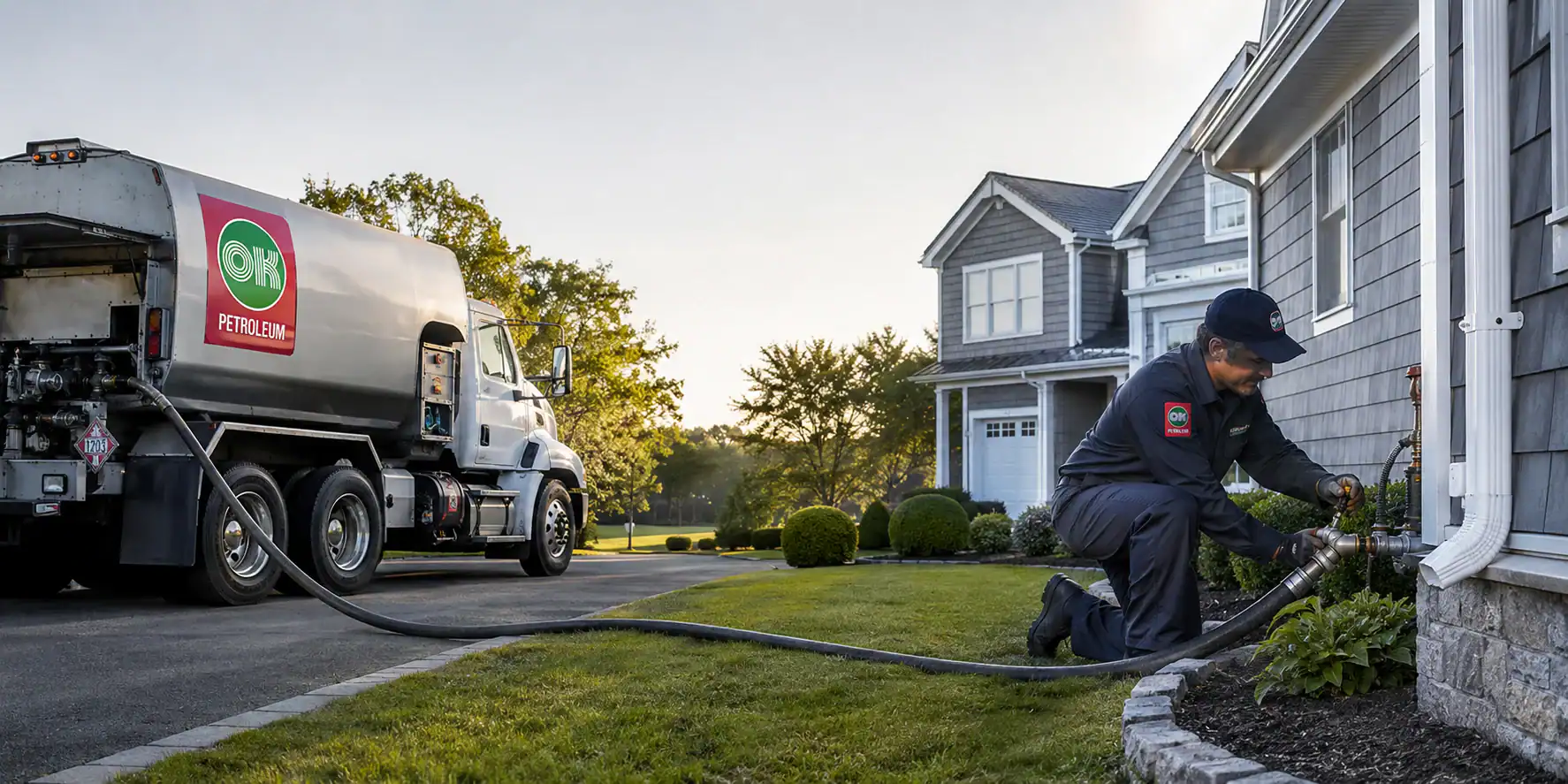
This is one reason we offer automatic delivery alongside our on-demand will-call service. Our automatic delivery model uses predictive computer modeling to track your usage patterns and schedule deliveries before your tank gets low — not just before you run out, but before the conditions that lead to fuel quality problems develop in the first place. It's a subtle benefit that most homeowners never think about until they've had a problem.
For customers who prefer control over timing and quantity, our will-call service lets you order exactly the number of gallons you want, online, with no contracts and no extra fees. You can specify precisely how much you need, pay digitally, or use our mobile app. The flexibility is real — and so is the accountability. When you're ordering on your own schedule, you're also in a position to keep your tank at a level that protects your system.
We've been delivering heating oil across Nassau County and Suffolk County since 1976. That's nearly five decades of supply chain relationships, terminal knowledge, and Long Island delivery experience. We know where the good fuel comes from and how to get it to your door without incident. Our A+ Better Business Bureau rating reflects a track record that's built on more than just showing up — it's built on showing up with the right fuel, consistently, season after season.
Heating oil quality FAQs Nassau County homeowners actually ask
**Is all heating oil the same regardless of which company delivers it?**
No — and this is probably the most common misconception in the market. All No. 2 heating oil must meet ASTM D396, but that standard sets a floor, not a ceiling. Sulfur content, biodiesel blend percentage, and the additive packages that suppliers use at the point of loading all vary. Two deliveries from two different suppliers can look identical in the tank and perform very differently over a season.
**Do I need to change anything in my system to use Bioheat® fuel?**
Nothing. Oil-fired heating systems are compatible with Bioheat® blends without any modifications. Since Nassau County has required at least B5 since 2018, there's a good chance your system has been running on it for years without you realizing it. As the mandate increases toward B10 and eventually B20, your equipment will handle it the same way.
**Why does my filter keep clogging? Is it bad heating oil?**
It might be — but it's more often the tank. Bacteria grow in heating oil over time, producing sludge that settles at the bottom of the tank. When a delivery stirs up the tank, that sludge gets suspended in the fresh fuel and travels toward your filter and nozzle. If you're seeing repeated filter clogs, a tank cleaning is usually the right first step before pointing the finger at your supplier. We can help diagnose whether the problem is fuel quality or tank condition.
**How do I know if my heating oil supplier is delivering good quality fuel in Nassau County?**
Ask them directly: What sulfur content does your fuel meet? What Bioheat® blend are you delivering? Do you use additives at the point of loading? A supplier that can answer those questions clearly and specifically is one that takes fuel quality seriously. One that deflects or gives vague answers probably isn't thinking about it much. We're happy to answer those questions — call us at (631) 321-0549.
**Does better heating oil quality actually extend the life of my system?**
Yes, meaningfully. A well-maintained oil heating system can last 15 to 25 years. Ultra-low sulfur fuel and Bioheat® blends reduce sulfur buildup inside the system, which is one of the primary causes of premature wear on burner components. Cleaner fuel means less residue, fewer service calls, and a system that earns its full lifespan.
Choosing a heating oil supplier in Nassau County worth trusting
Heating oil quality isn't a complicated subject once someone explains it honestly. The fuel in your tank varies between suppliers. Your tank's condition shapes how that fuel reaches your burner. And the delivery model your supplier uses — how often they fill you, how low they let you run — affects the whole equation in ways most homeowners never consider.
If you've had unexplained furnace problems, repeated filter clogs, or just a nagging feeling that you're not getting the full story from your current supplier, those aren't signs to ignore. They're worth a real conversation.
OK Petroleum Distribution has been having that conversation with Nassau County homeowners since 1976. If you want straight answers about what's in your tank and how we can help, give us a call at (631) 321-0549.