


Here's something most heating oil companies won't tell you: the price per gallon is rarely where the real difference lives. For Nassau County homeowners — especially those in Levittown, Massapequa, Merrick, and Wantagh, where postwar homes with oil heat systems are still the norm — the decision comes down to something more important than the number on the quote. It comes down to whether your supplier actually shows up, whether you're locked into terms you didn't fully understand, and whether you have any real control over how and when you order. This guide is about helping you make that call clearly.
What to Actually Look for in Local Heating Oil Suppliers
The most common complaint we hear from Nassau County homeowners who are switching suppliers isn't about price. It's about contracts they didn't fully understand, termination fees they didn't expect, and prices that were supposed to drop with the market but never did.
When you're evaluating local heating oil suppliers, the first question isn't "who's cheapest?" It's "what am I agreeing to?" A supplier who leads with a low per-gallon rate but buries delivery minimums, service fees, or multi-year contract terms in the fine print can end up costing you significantly more than a supplier with a slightly higher headline price and no strings attached.
The second question is reliability. A company can offer the lowest price on Long Island, but it doesn't matter if they can't get a truck to your driveway during a cold stretch in February. Discount suppliers often operate with thinner margins and smaller fleets — which works fine in mild weather and falls apart exactly when you need them most.

Automatic Delivery vs. Will-Call — Which Works Best for Nassau County Homes?
This is one of the most practical questions a Nassau County homeowner can ask, and most oil suppliers don't explain it well. The short version: automatic delivery takes the monitoring off your plate entirely, while will-call puts you in full control of when and how much you order. Neither is universally better — the right choice depends on your household.
Automatic delivery uses predictive computer models that track your usage patterns based on temperature, square footage, and past consumption, then schedules a delivery before your tank runs low. You don't have to watch the gauge, call anyone, or remember to reorder. For busy households, frequent travelers, or anyone who's had that sinking feeling of realizing the tank is nearly empty on a Friday night heading into a cold weekend, automatic delivery removes the anxiety entirely.
Will-call, or on-demand service, is the opposite approach. You decide when to order, specify exactly how many gallons you want, and pay online. No contracts, no extra fees, no minimum commitments. For homeowners who like to watch the market, order strategically, or simply prefer to stay in control of their spending, will-call makes a lot of sense. The tradeoff is that you're responsible for keeping an eye on your tank — if you forget and run out during a cold snap, you're the one who has to scramble.
We offer both automatic and will-call service, and our Nassau County customers can move between them based on what their life looks like at any given time. That flexibility is something a lot of discount-only suppliers simply don't offer.
Hidden Fees and Contract Terms to Watch For
Nassau County's heating oil market is competitive, which is mostly a good thing for consumers. But competition also means suppliers have gotten creative about how they structure pricing — and not always in ways that favor you. Before you sign up with any supplier, there are a few specific things worth examining closely.
First, look at what's actually included in the per-gallon rate. Some suppliers quote a low price per gallon but add delivery fees, minimum order requirements, or fuel surcharges that only appear on the invoice. Ask directly: Is there a delivery fee? Is there a minimum number of gallons per order? Are there any additional charges beyond the per-gallon rate?
Second, ask about contract terms and exit fees. Some suppliers — particularly those offering price-cap or price-protection plans — require you to sign a service agreement for a full heating season or longer. If you want to leave before the term ends, you may owe a termination fee. That's not inherently wrong, but it's something you should know going in, not after the fact.
Third, if a supplier offers a variable pricing plan, ask how it works when prices drop. The complaint we hear most often is that variable rates move up quickly when the market rises but barely budge when it falls. If a supplier can't explain clearly how their pricing responds to market changes in both directions, that's worth noting.
For reference, NYSERDA — New York State's energy authority — publishes regional heating oil prices for Long Island on an ongoing basis. It's a useful benchmark for understanding where the market is at any given time, and it's publicly available. Knowing the market rate before you call any supplier puts you in a much stronger position.
How Home Heating Oil Delivery Works on Long Island
If you've never set up a heating oil account before — or you're switching suppliers for the first time — the process is simpler than it might seem. Understanding how it works from order to delivery helps you know what to expect and what questions to ask before you commit.
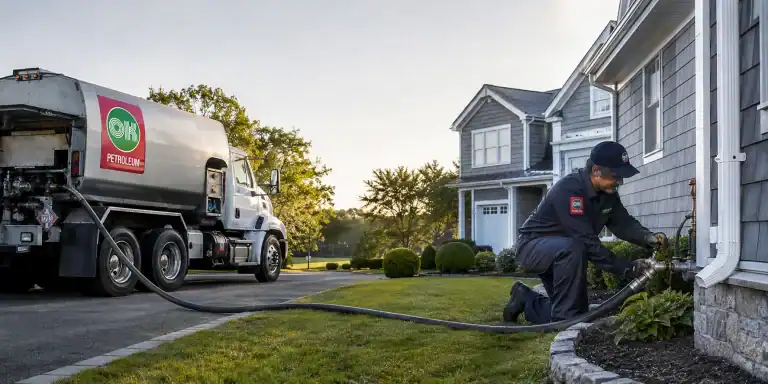
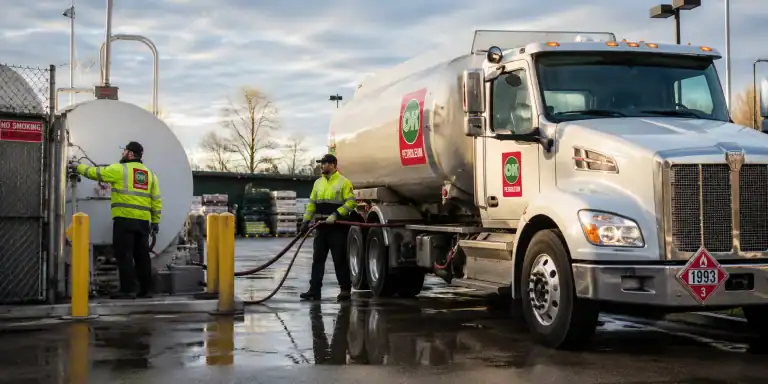
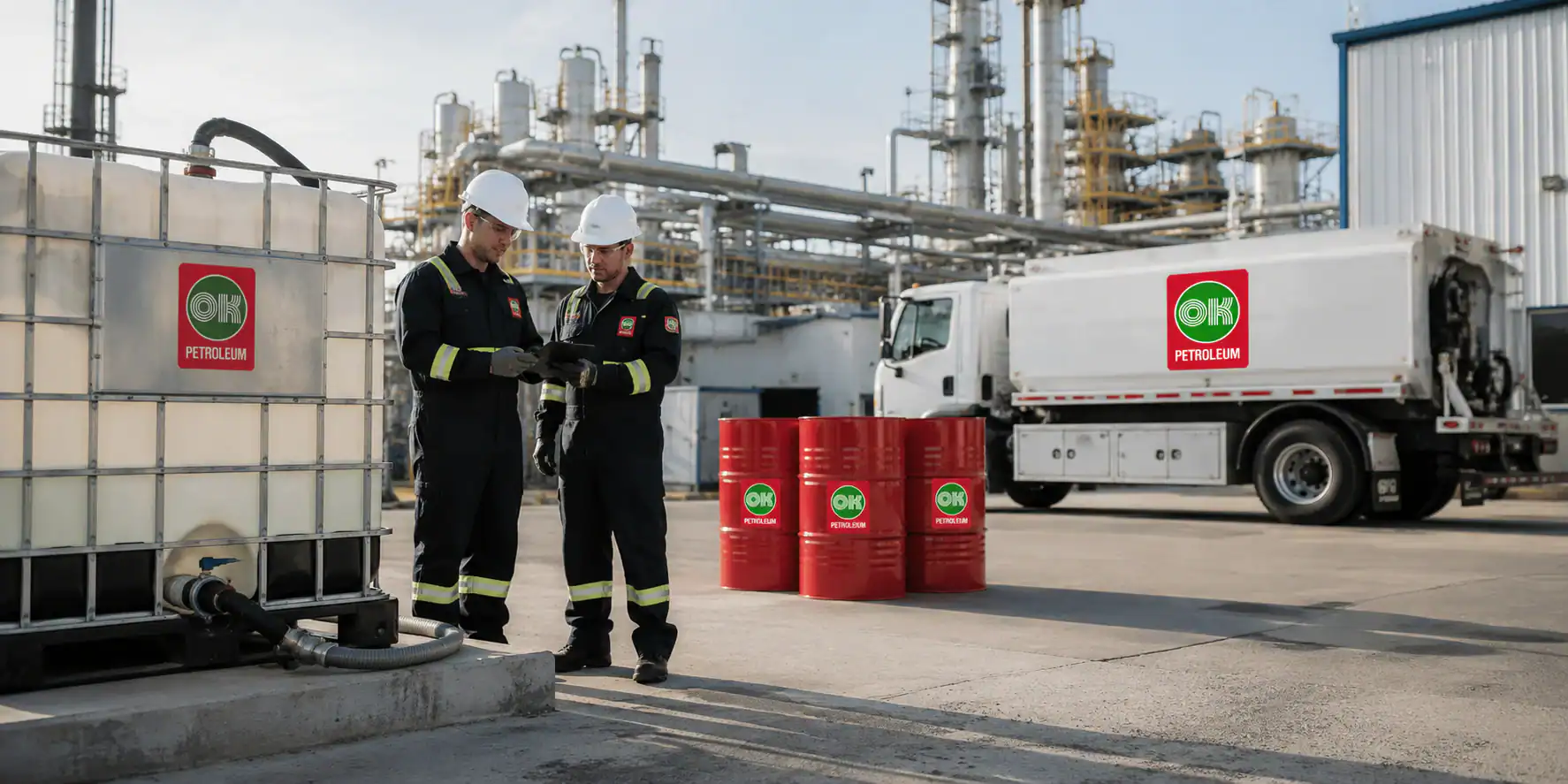
At its core, home heating oil delivery is a scheduled service. You either set up automatic delivery and let your supplier manage the timing, or you place on-demand orders when your tank needs filling. The order goes in, a delivery is scheduled, a truck comes to your address, and the oil goes into your tank. The complexity — if there is any — usually lives in the pricing structure and contract terms, not the delivery itself.
Payment Plan Options for Heating Oil in Nassau County
This is where the real financial planning happens, and it's worth spending a few minutes understanding your options before you commit to any supplier.
The most straightforward option is paying per delivery — sometimes called COD, or cash on delivery. You order when you need oil, you pay for what you get, and there's no ongoing financial commitment. For homeowners who want maximum flexibility and no long-term exposure, this is the cleanest model. The tradeoff is that your cost per gallon will reflect whatever the market rate is at the time of each delivery, which can vary significantly from fall to mid-winter.
A budget plan spreads your estimated annual heating oil cost across 12 equal monthly payments. Instead of paying a large amount in January when you're burning the most oil, you pay a consistent monthly amount year-round. It doesn't change how much oil you use — it just smooths out the cash flow. For households on a fixed income or anyone who prefers predictable monthly expenses, this can be genuinely useful.
A price protection or price-cap plan locks in a maximum per-gallon price for the heating season. If the market goes above that cap, you pay the capped rate. If it goes below, you typically pay the lower market rate. This gives you a ceiling without locking you into a fixed price if the market drops. It's a middle ground between the full flexibility of COD and the full predictability of a prepay plan.
Prepaying — locking in a specific price per gallon before the season starts — is often done in summer when prices are historically lower. If you prepay and the market drops below your locked price, you've paid more than you needed to. If it rises above your locked price, you've saved. It's essentially a bet on where prices will go, and it works best for homeowners who have the cash available in the off-season and want certainty above all else.
We offer all of these options — prepayment, budget plans, and price protection plans — because different households have different priorities, and a single payment model doesn't fit everyone.
Eco-Friendly Heating Oil Options for Long Island Homes
This question comes up more often than it used to, and it's a reasonable one — especially as New York State continues to tighten environmental standards around heating fuel.
Modern heating oil is meaningfully cleaner than what was being burned in Nassau County homes twenty or thirty years ago. Low-sulfur heating oil has largely replaced older, higher-sulfur formulations, and Bioheat — a blend of traditional heating oil and biodiesel made from renewable sources — has become increasingly available and increasingly standard. New York State has been phasing in Bioheat requirements for several years, so many homeowners are already using a blended fuel without necessarily knowing it.
From a practical standpoint, Bioheat burns cleaner, produces fewer emissions, and can actually be better for your heating system over time. The biodiesel component has lubricating properties that reduce wear on older equipment. For homes in Levittown, Seaford, or Wantagh where the heating system may have been installed decades ago, that's not a trivial point.
We offer both low-sulfur heating oil and biofuel-based eco-friendly options. If environmental impact matters to your household, or if you want to stay ahead of where state regulations are heading, it's worth asking about Bioheat when you set up your account. You don't need to modify your system or do anything differently — it's simply a cleaner choice that's available right now.
How to Choose a Home Oil Supplier You Won't Regret
The right home oil supplier for a Nassau County homeowner isn't necessarily the one with the lowest price on any given day. It's the one that shows up reliably, explains their terms clearly, gives you real options for how you pay and how you order, and has enough of a track record that you're not taking a gamble every winter.
We've been delivering heating oil to Long Island homes for over 40 years — through price spikes, brutal winters, and everything in between. We're family-owned, A+ rated by the Better Business Bureau, and we offer both automatic and on-demand delivery because we know different households need different things. No contracts on will-call service. Online ordering. A mobile app. Eco-friendly fuel options. Multiple payment plans.
If you're ready to talk through your options or want to get a delivery scheduled, give OK Petroleum Distribution a call at (631) 321-0549. We're here when you need us.