


If you've ever opened a heating oil invoice and wondered why the total didn't match what you expected, you're not alone. Nassau County, NY homeowners deal with this every winter — a per-gallon price that looked reasonable, plus a delivery surcharge, a service fee, a minimum gallon requirement, or a contract exit penalty they didn't know was in the mix. It adds up fast, and it's frustrating. This page is for buyers who are done guessing. We'll walk you through what hidden fees look like, how to evaluate local heating oil suppliers honestly, and why the delivery model you choose matters more than most people realize.
What Home Oil Suppliers Don't Always Tell You Upfront
The per-gallon price is the number that gets advertised. It's what shows up on comparison sites, what gets quoted over the phone, and what most buyers use to decide who to call. But the per-gallon price is rarely the whole story.
Common add-ons include delivery surcharges, minimum gallon requirements per order, annual service or account fees, and — if you're on a fixed or cap-price plan — a premium baked into the rate itself that you're paying whether prices rise or not. Some contracts also carry cancellation fees if you switch suppliers mid-season.
The New York Department of Consumer and Worker Protection specifically advises Nassau County consumers to check for hidden costs, fees, and minimum purchasing requirements before committing to any supplier. That guidance exists because the complaints are real.
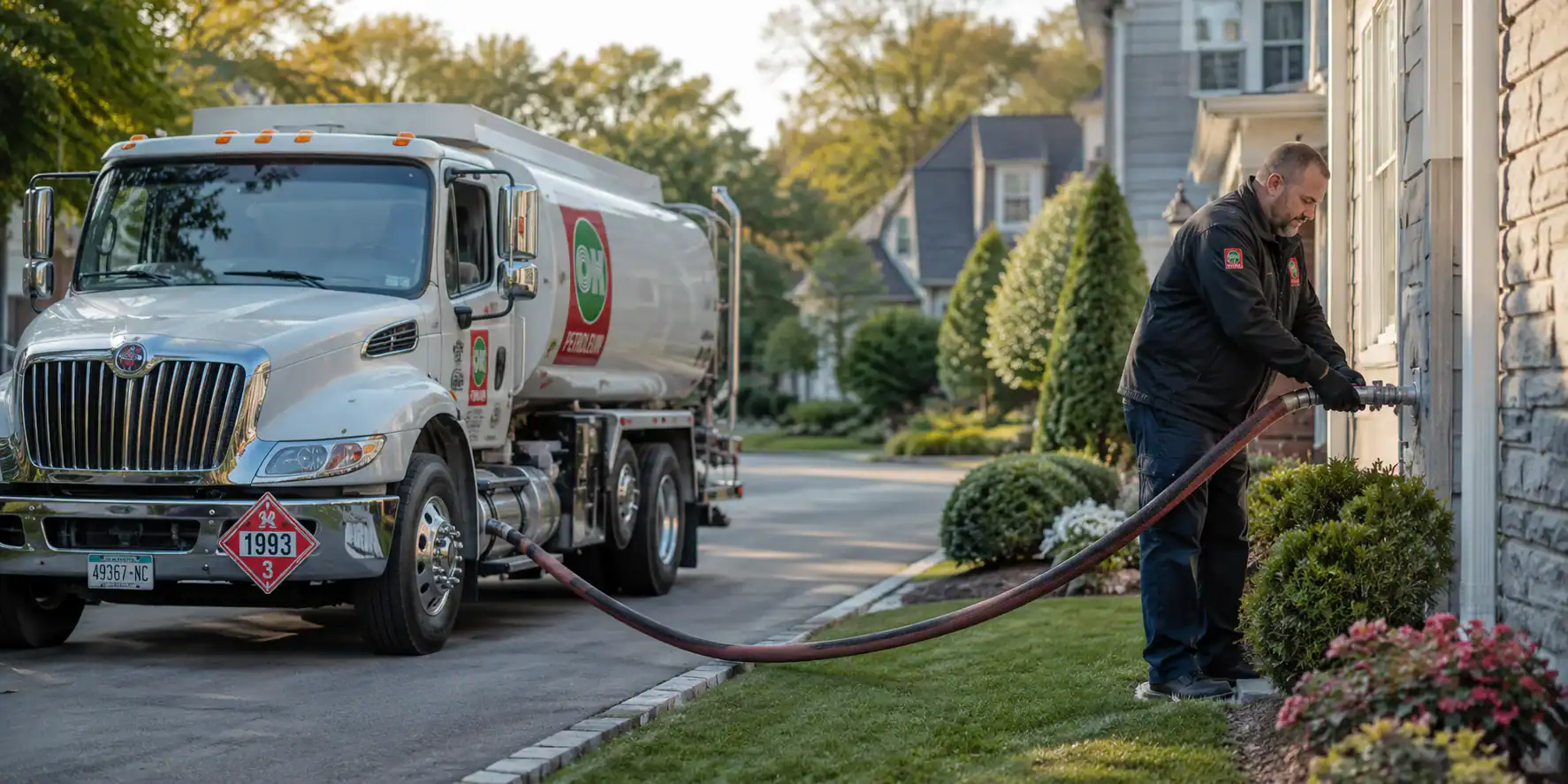
How Automatic Delivery Pricing Actually Works — and Where It Can Get Murky
Automatic delivery is genuinely useful. If you're busy — and with an average commute of 36 minutes, most Nassau County households are — you probably don't want to monitor your tank gauge every few days from October through March. Automatic delivery takes that off your plate entirely.
A good program uses computer models to track your home's consumption history and adjust delivery timing based on weather, so you're not getting a delivery you don't need and you're not running low before the next one arrives. The problem isn't the model — it's how some suppliers use it.
When you're on automatic delivery, you're typically not actively shopping for a price each time. You don't call to place an order, you don't specify gallons, and you may not be paying close attention to what the per-gallon rate is on any given delivery. Some suppliers take advantage of that. The "market price" charged to automatic delivery customers is set by the supplier, not by an independent benchmark. That gives a supplier room to charge more than the actual market rate without most customers noticing until they compare notes with a neighbor.
Before you choose automatic delivery, ask: what rate will I be charged, how is it determined, and can I see it before the truck shows up? If a supplier can't answer that question clearly, that's information too.
Many automatic delivery programs come with a seasonal or annual commitment. That's not inherently a problem — but if you decide mid-winter that you want to switch suppliers, you may be looking at a cancellation fee or a requirement to fulfill a minimum number of deliveries first. Understanding those terms before you enroll matters.
Will-Call Delivery: What You Control and What You Give Up
Will-call delivery — sometimes called COD or on-demand delivery — flips the model entirely. You decide when to order, how many gallons you want, and you pay at the time of the order. No contract, no automatic charges, no surprises on the invoice.
The trade-off is that you're responsible for monitoring your tank. If you forget to check the gauge during a busy stretch in January and the tank runs low, you're placing an emergency order — and emergency delivery pricing is typically higher than standard delivery pricing.
The other thing will-call buyers give up is the predictive cushion that a good automatic delivery program provides. If a severe nor'easter is forecast and every supplier on Long Island is fielding emergency calls at once, will-call customers are competing for delivery slots with everyone else. Automatic delivery customers who are already topped up don't have that problem.
Neither model is universally better. The right choice depends on how closely you want to manage your fuel supply and how much you value the convenience of not thinking about it. What matters most is that you have the option to choose — and that whichever model you pick, the pricing is transparent and the terms are clear.
What to Look for in Local Heating Oil Suppliers in Nassau County, NY
Nassau County is one of the most oil-heat-dependent markets in the country. About 59% of Long Island homes run on heating oil — compared to less than 9% nationally. That's not a coincidence. The county's housing stock was built predominantly in the post-World War II decades, when oil-fired systems were the standard and natural gas infrastructure across Long Island was limited.
Most of those systems are still running today in communities like Levittown, Bethpage, Massapequa, Plainview, and Wantagh. What that means practically is that Nassau County buyers have a lot of suppliers to choose from and a real need to evaluate them carefully. Price matters, but it's not the only thing that matters.
How to Evaluate a Heating Oil Company Before You Commit
Start with transparency. Can the supplier tell you clearly what you'll pay per gallon, what fees are included, and what the terms are if you want to stop service? If the answer requires a long explanation or a contract you need to read carefully before signing, that's worth noting. A supplier who's confident in their pricing doesn't need to bury it.
Longevity matters more than it might seem. A company that has been operating in Nassau and Suffolk Counties for decades has weathered price spikes, supply crunches, and severe winters. They've built delivery infrastructure, established supplier relationships, and developed the operational depth to keep routes running when demand spikes in February and everyone needs oil at once.
Third-party verification is worth checking. Better Business Bureau accreditation means the company has committed to a specific set of standards around transparency, responsiveness, and complaint resolution. In an industry where consumer complaints about billing and hidden fees are common enough to prompt consumer protection guidance from the state, that kind of accountability signal has real weight.
Finally, ask about flexibility. Can you switch between automatic and will-call delivery if your situation changes? Can you order online and specify the exact number of gallons you want? Is there a mobile app? These aren't luxury features — they're signals that the supplier has invested in making service work for the customer, not just for their own scheduling convenience.
How We Handle Oil Delivery Differently — and Why It Matters for Nassau County Homeowners
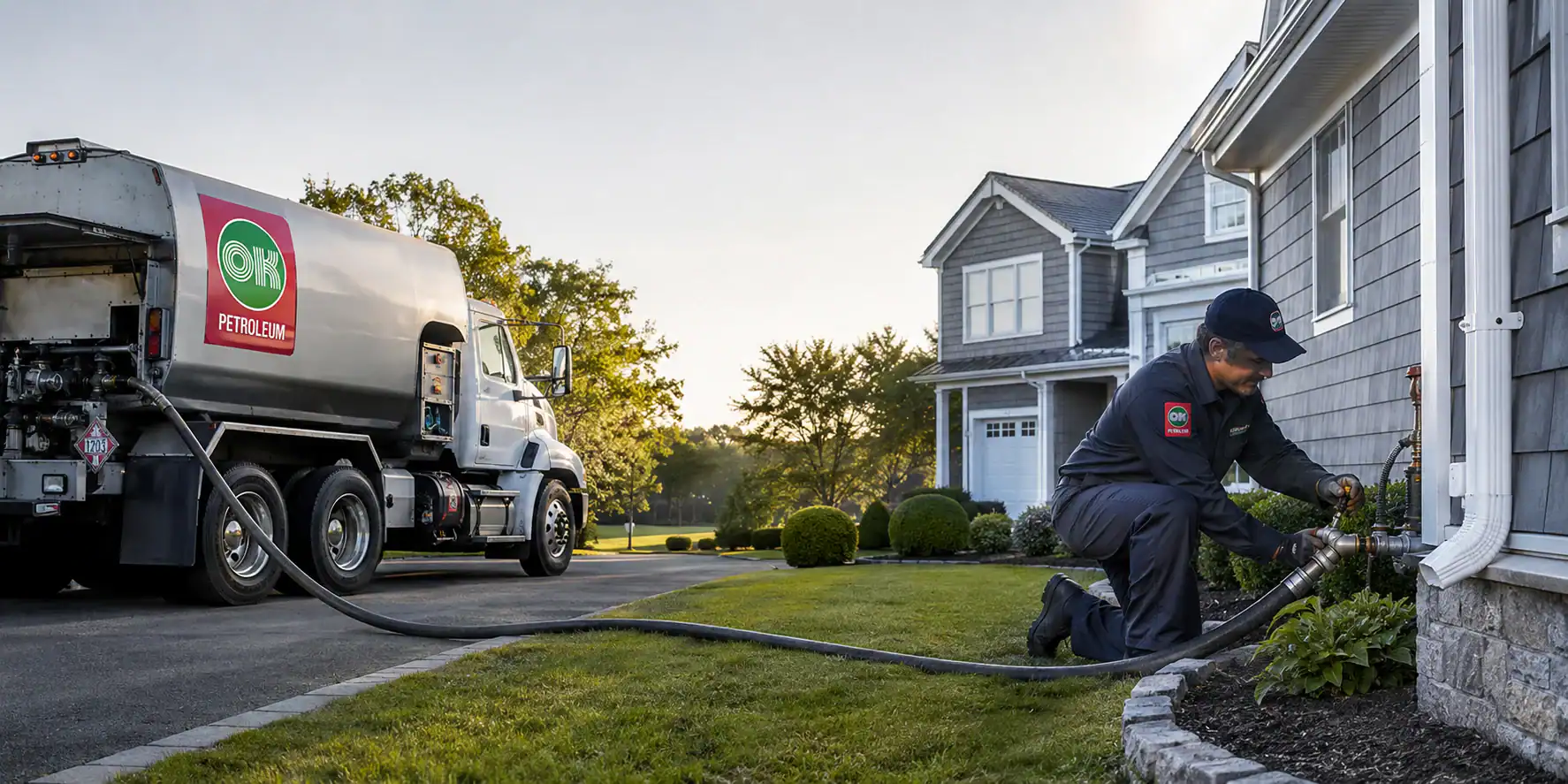
We've been delivering heating oil to Nassau and Suffolk County homes since 1976. That's over 40 years of winters on Long Island — nor'easters, price spikes, supply disruptions, and all the rest. We're not a national chain that opened a Long Island depot. We're a family-owned operation based in Wyandanch, with gas stations throughout Nassau and Suffolk Counties and delivery routes that run through communities like Mineola, Garden City South, Manhasset, Plainview, Baldwin, and Bellmore.
Our automatic delivery program uses predictive computer models that track your home's consumption history and adjust delivery timing based on actual weather patterns — not just a fixed calendar schedule. That means you get oil when you need it, not just when a schedule says you should. You're not getting a delivery you don't need either.
For customers who prefer to stay in control, our will-call service lets you place an order online, specify the exact number of gallons you want, and pay directly through our website or mobile app — available on iOS and Android. No phone calls during business hours required. No minimum order guessing. If you notice the gauge is low at 10pm on a Tuesday, you can handle it right then.
There are no contracts or extra fees on our on-demand service. What you see is what you pay. We're also A+ rated by the Better Business Bureau, which we mention not to check a box but because we think it means something in an industry where that kind of accountability isn't universal. If you want to talk through your options or get started, you can reach us at (631) 321-0549.
Choosing a Heating Oil Supplier in Nassau County: The Short Version
The right heating oil supplier isn't necessarily the one with the lowest advertised price. It's the one whose total cost — including fees, terms, and delivery reliability — actually holds up once you're a customer. For Nassau County homeowners, that means asking the right questions before you commit, not after the first invoice arrives.
Look for transparent pricing, a clear explanation of any fees, and a delivery model that fits how you actually live. If you want the hands-off convenience of automatic delivery, make sure the rate is fair and the terms are reasonable. If you want full control over timing and quantity, make sure there are no hidden minimums or penalties attached to that flexibility.
We've been doing this on Long Island for over four decades, and our goal is straightforward: give you reliable delivery, honest pricing, and the ability to order on your terms. If you're ready to switch suppliers or just want to understand your options better, OK Petroleum Distribution is a good place to start.