


If you run a business in Nassau County with any kind of vehicle fleet, you already know the drill. Drivers clock in, load up, and before they even get started on the day's work, someone's making a detour to a gas station. It doesn't feel like a big deal — until you start adding it up. That time off-route, multiplied across vehicles, multiplied across weeks, quietly becomes one of the more expensive habits in your operation. This page is for business owners who are ready to look at a smarter way to keep their vehicles fueled — without contracts, without hassle, and without chasing down receipts from three different stations.
Mobile Fuel Delivery for Nassau County Business Fleets
The idea behind mobile fuel delivery is straightforward: instead of your vehicles going to the fuel, the fuel comes to your vehicles. That might sound like a luxury, but for businesses running five, ten, or more vehicles out of Nassau County, it's closer to a necessity once you see what the alternative is actually costing you.
Research from the fleet management industry puts the number at around 62 hours lost per vehicle per year — just from gas station trips. Individual pump stops can eat 20 minutes per driver per day. For a small fleet operating across Nassau County, that's hours of paid labor spent doing nothing productive. Mobile fuel delivery eliminates that entirely.
What Does Mobile Fuel Delivery Actually Look Like Day-to-Day?
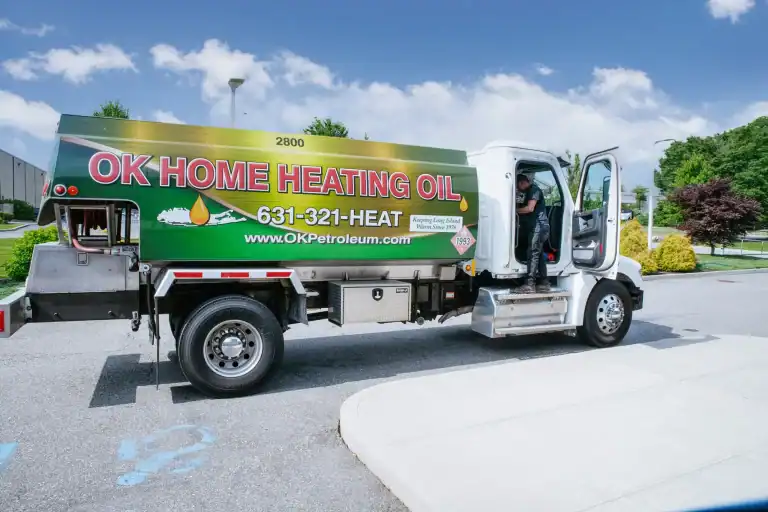
For most Nassau County businesses, the shift to delivered fuel is simpler than expected. You place an order — either by phone or online — specify exactly how many gallons you need, and schedule a delivery to your lot, job site, or facility. The fuel arrives. Your vehicles are ready to go in the morning. That's essentially the whole process.
What changes is the rhythm of your operation. Drivers start their routes from a full tank instead of starting their day at a pump. Fleet managers stop fielding questions about which station to use or reconciling fuel receipts from five different locations. The administrative overhead that quietly accumulates around retail fueling — tracking receipts, monitoring spending, managing reimbursements — shrinks considerably when fuel procurement happens in one place, on one invoice.
For businesses in areas like Levittown, Massapequa, Hempstead, and Bethpage, where commercial activity is dense and road time is valuable, that kind of operational simplification matters. The Hempstead Turnpike corridor alone is home to hundreds of contractors, HVAC companies, landscaping businesses, and service fleets. Every one of them is dealing with the same daily fueling friction. The businesses that solve it first tend to run leaner.
There's also the question of consistency. When your drivers are filling up at different retail stations, you have no real control over fuel quality, no centralized record of consumption, and no way to spot inefficiencies without manually reviewing every receipt. Delivered fuel gives you a clear record of exactly what was ordered, when it arrived, and how much was used — which is useful both for accounting and for spotting patterns in your fleet's consumption.
We offer both automatic delivery and on-demand will-call service. Automatic delivery uses predictive modeling to estimate your usage and deliver before you run low — no manual monitoring required. Will-call gives you complete control: you order when you want, in the quantity you want, with no contract and no extra fees attached. Both options are available through our online ordering system, where you can specify the exact number of gallons and pay without a phone call if that's easier for you.
Fuel Delivery for Generators, Job Sites, and Equipment
Fleet vehicles are the most obvious use case, but they're far from the only one. Nassau County businesses that rely on backup generators, construction equipment, or fuel-powered machinery face a separate but equally real fueling challenge — and delivered fuel solves it just as cleanly.
After Hurricane Sandy hit Long Island in 2012, the businesses that were caught without reliable generator fuel felt it immediately. Low-lying areas like Long Beach, Freeport, and Oceanside saw extended outages, and the businesses that had fuel on hand kept operating while others scrambled. That experience shifted how a lot of Nassau County business owners think about fuel as a continuity issue, not just an operational one. Having a reliable supplier you can call — or order from online — before a storm hits is a different kind of value than just saving time on daily fill-ups.
For construction companies running equipment in Westbury, Hicksville, or along the Sunrise Highway corridor, the logistics of keeping diesel-powered machinery fueled on an active job site can be genuinely complicated. Sending a driver off-site to get fuel costs time and money. Having diesel delivered directly to the site removes that variable entirely.
We deliver gasoline, diesel, heating oil, and kerosene — which means that whether you're fueling a fleet of service vans, a generator at a commercial facility, or heavy equipment at a job site, you're dealing with one supplier and one point of contact. That consolidation matters more than it might seem at first. Managing multiple fuel vendors means multiple invoices, multiple delivery windows to coordinate, and multiple relationships to maintain when something goes wrong. Consolidating with a single supplier who covers the full range of what your business needs simplifies all of that.
We've been delivering fuel across Nassau and Suffolk Counties since 1976. That's not a marketing line — it's the reason we know these roads, these neighborhoods, and the specific demands of businesses that operate here year-round.
Diesel Suppliers Near Me: What to Look for in Nassau County
When Nassau County business owners search for diesel suppliers, the list of options can look similar on the surface. Most providers claim reliability, most claim competitive pricing, and most say they serve Long Island. The differences that actually matter tend to show up in the details — contract terms, product range, ordering flexibility, and whether the company has the track record to back up what it's promising.
A supplier who's been operating since 1976 and has never run out of product is a different proposition than a newer entrant making the same claims. Longevity in this industry reflects something real: the ability to manage supply chain relationships, maintain delivery infrastructure, and keep customers fueled through price spikes, storms, and every other disruption the market throws at you.
No Contracts, No Lock-In — What That Actually Means for Your Business
One of the more common concerns we hear from Nassau County business owners who are evaluating fuel delivery for the first time is the contract question. A lot of people have had experiences — or heard stories — about fuel supply agreements that locked them into pricing that stopped making sense, or penalized them for switching suppliers when circumstances changed. It's a legitimate concern, and it's worth addressing directly.
Our on-demand will-call service has no contract and no extra fees. You order when you need fuel, in the quantity you need, and that's the end of it. There's no annual commitment, no minimum volume requirement, and no penalty for ordering more or less than you did the previous month. For businesses where fuel demand fluctuates seasonally — landscaping companies, for example, or contractors whose project load varies — that flexibility is genuinely valuable.
The automatic delivery option works differently: it uses consumption modeling to anticipate your needs and deliver proactively, so you're not manually tracking tank levels or placing orders on a set schedule. That's a better fit for businesses with consistent, predictable fuel usage — a facility with a heating system, for instance, or a fleet with a stable size and regular routes.
Both options are available through our online ordering system. You can specify the exact number of gallons, complete the transaction online, and have a delivery scheduled without a single phone call if that's your preference. For business owners who are already managing a dozen other things, that kind of low-friction process matters.
We also carry a broader product range than most local suppliers: gasoline, diesel, kerosene, wholesale motor oil, and antifreeze. If your business currently has separate vendor relationships for different fuel products, consolidating with one supplier simplifies your procurement significantly. One account, one invoice, one point of contact when you have a question or need to adjust an order.
How to Evaluate a Fuel Delivery Provider Before You Commit
Choosing a fuel delivery supplier is a decision that affects your daily operations, so it's worth taking a few minutes to evaluate what you're actually getting before you make the call. Here are the things that tend to matter most for Nassau County businesses.
Start with longevity. A company that has been operating in the same market for decades has survived supply disruptions, price volatility, and competitive pressure. That survival record tells you something about how they manage their business. We've been serving Long Island since 1976 — nearly 50 years — and we've never run out of product or engaged in price gouging during shortage periods.
Look at the BBB rating. It's not the only trust signal, but an A+ accreditation from the Better Business Bureau means the company has committed to honest business practices and has a track record of resolving customer concerns. We hold an A+ BBB rating.
Ask about ordering flexibility. Can you order online? Can you specify the exact quantity you need? Is there a contract required? These aren't minor details — they determine how much friction is built into your ongoing relationship with the supplier. The easier it is to place an order, adjust a delivery, or ask a question, the less time you spend managing fuel and the more time you spend running your business.
Ask about product range. If you need gasoline for some vehicles, diesel for others, and motor oil for your service equipment, a supplier who carries all of it is meaningfully more convenient than one who covers only part of your needs. Fewer vendors means fewer invoices, fewer delivery windows to coordinate, and fewer points of failure in your supply chain.
Finally, look for a local physical presence. A supplier with a real address, a phone number that connects to a person, and actual infrastructure in your market is a different kind of partner than a national provider operating from a call center. We're based at 45 Commerce Drive in Hauppauge, and we operate more than 25 gas stations across Nassau and Suffolk Counties. We're not a middleman — we're a regional operator with real roots in this market.
Ready to Stop Running Your Drivers to the Pump?
The math on commercial fuel delivery tends to be clearer once you actually run the numbers. Sixty-two hours per vehicle per year in lost productivity from retail gas station trips is a real cost — one that shows up in labor expenses, delayed routes, and driver time that could be spent doing actual work instead of waiting at a pump.
For Nassau County businesses, the case for switching to delivered fuel isn't about convenience for its own sake. It's about removing a recurring operational drag that most business owners have simply accepted as part of the routine. It doesn't have to be.
If you're ready to simplify how your business handles fuel — whether that's gasoline, diesel, or anything else in your operation — OK Petroleum Distribution has been doing this on Long Island since 1976. Give us a call at (631) 321-0549 and we'll walk you through what makes sense for your specific situation.