


Most Suffolk County homeowners do not think much about heating oil until the tank gets low or the bill comes in higher than expected. Then suddenly it matters a lot. If you have noticed your per-gallon price changing from month to month or from neighbor to neighbor, there is a logical explanation for all of it. The price you pay is not arbitrary. It is shaped by a combination of global market forces, local demand patterns, and choices you make concerning how and when you order. Once you understand what is driving the number, you are in a much better position to do something about it.
What Drives Home Heating Oil Prices On Long Island
The single biggest factor in what you pay per gallon is the price of crude oil. Heating oil is a refined petroleum product, which means its cost moves in lockstep with global crude markets. When OPEC cuts production, when geopolitical tensions rise in oil-producing regions, or when the U.S. dollar weakens against other currencies, you feel it at the tank.
For Long Island specifically, the relevant pricing benchmark is the NY Harbor commodities market. This is the trading hub that sets wholesale heating oil prices for the entire Northeast, including Nassau and Suffolk Counties. A supply disruption halfway around the world can move your per-gallon cost within days. That is not an exaggeration. It is just how the market works.
Why Heating Oil Prices Spike Every Winter In Suffolk County
Seasonal demand is one of the most predictable and most costly price drivers, and yet most homeowners still get caught off guard by it. October through March is peak season for heating oil across the Northeast. Demand surges, supply terminals get drawn down, and suppliers have less incentive to compete aggressively on price when orders are already rolling in. The result is a reliable annual pattern: prices climb as temperatures fall.
For Suffolk County, this dynamic hits harder than it does in many other parts of the country. Nearly 44% of homes in the county use heating oil as their primary heating fuel. That is not a small niche. It is close to half the county. When a nor'easter rolls through in January and everyone heat runs higher for three or four days straight, the demand spike is real and immediate. Delivery windows stretch. Prices hold firm or move higher. Emergency orders pile up.
The February problem is particularly sharp. By mid-winter, heating oil inventories have been drawn down since October. Any supply disruption, a refinery issue, a cold snap that hits the entire Northeast simultaneously, or a logistics bottleneck, lands at the worst possible time. Homeowners who are already low on oil and ordering reactively are paying the highest prices of the year, often without realizing that timing was the main variable.
The flip side of this is equally true and far more actionable. Late spring and early summer, roughly April through June, is when heating oil prices on Long Island are typically at their lowest. Demand is minimal, terminals are well-stocked, and suppliers are actively competing for business. Filling your tank during the off-season, when you have no urgency, is one of the most straightforward ways to pay less per gallon. It is not a trick. It is simply buying when the market is in your favor instead of against you.
There is also the early-season risk that catches people off guard every few years. A cold snap in late October or early November, before most homeowners have thought about their oil situation, can trigger a rush of simultaneous orders before suppliers are fully stocked for the season. Prices jump, delivery windows extend, and the homeowners who waited are suddenly competing with everyone else on Long Island for the same limited supply.
How Order Size Affects Your Per-Gallon Price
This is one of the most overlooked factors in what Suffolk County homeowners pay for heating oil, and it is one of the few variables you have direct control over. The per-gallon price you are quoted is not flat. It drops as your order size increases. That is not a special deal or a loyalty reward. It is a standard volume pricing structure that reflects the economics of delivery logistics.
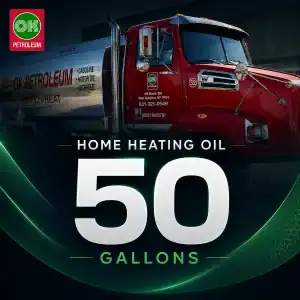
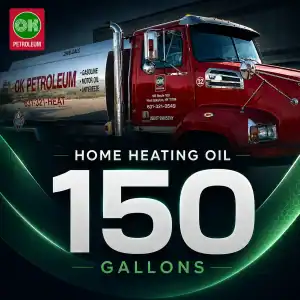
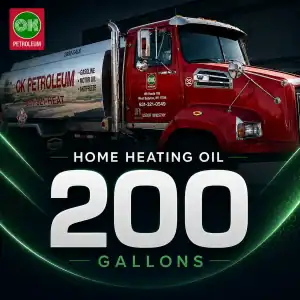
To put real numbers to it: ordering 50 gallons costs $3.669 per gallon. Order 200 gallons in a single delivery and that drops to $2.859 per gallon. That is an $0.81 difference per gallon. On a 200-gallon order, that represents over $160 in savings compared to placing four separate 50-gallon orders. Most homeowners never see this spelled out clearly, which is why so many of them leave money on the table by ordering small amounts frequently instead of larger amounts less often.
A typical Northeast home uses somewhere between 850 and 1,200 gallons of heating oil over the course of a full winter. That is a significant volume, and how you spread those deliveries out has a real impact on your annual fuel cost. Ordering larger quantities when prices are lower, particularly during the off-season, compounds the savings. You are getting a better per-gallon price on a larger volume at a lower market price. Both variables work in your favor at the same time.
The practical implication here is worth sitting with. If you have been calling for 50 or 75 gallons at a time whenever the gauge drops, you are consistently paying the highest per-gallon rate available. It is not that anything dishonest is happening. Smaller orders simply carry higher unit costs. Understanding this does not require any complicated strategy, just ordering more intentionally.
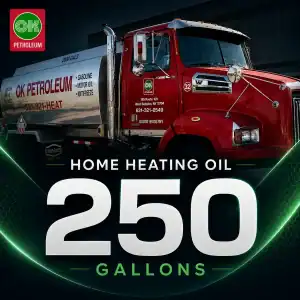
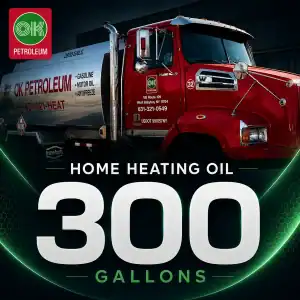
Our online ordering system lets you specify exactly how many gallons you want, anywhere from 50 to 500, and see the per-gallon price before you commit. That kind of transparency makes it easier to plan deliveries around both your budget and the market.
Delivery Model And Supplier Choice Matter In Suffolk County
The factors above (crude oil markets, seasonal timing, order volume) are mostly about the broader market. However, the delivery model you choose and the company you work with also shape your cost and experience in ways that are easy to underestimate.
Not all heating oil companies on Long Island operate the same way. Some are national aggregators dispatching third-party drivers. Some are local operators who own their trucks and manage every delivery directly. The difference matters when something goes wrong or when you need to make a change quickly.
Automatic Delivery vs. Will-Call: Which Works Best For You?
The two most common delivery models for home heating oil are automatic delivery and will-call, also called on-demand service. Each has real advantages depending on your situation, and the right choice can affect both your cost and your peace of mind.
Automatic delivery uses a computer model to track your estimated consumption based on weather, your home heating history, and other variables. We schedule deliveries before your tank runs low without you having to monitor a gauge or pick up the phone. For busy homeowners, frequent travelers, or anyone who has ever run out of oil on a cold night, this model removes the single biggest failure point in the whole system. You do not run out because the delivery happens before you need to think about it.
With our Scheduled Delivery, you receive an email confirmation each time a delivery is scheduled, and you can pause, adjust, or cancel at any time from your online dashboard. That last part matters more than people realize. Automatic delivery has a reputation for locking customers in, but that is not how ours works. You stay in control of the schedule, and the automation just handles the logistics so you do not have to.
Will-call service is the other model: you order when you decide to, for exactly the quantity you want, and pay at the time of the order. No contracts and no extra fees apply. For homeowners who want to time their purchases strategically, such as ordering larger quantities during the off-season when prices are lower, will-call gives you that flexibility. You are not on a fixed schedule. You order on your terms.
Neither model is universally better. The right choice depends on how closely you want to manage your fuel costs versus how much mental overhead you want to hand off. Some homeowners use automatic delivery during the winter and switch to will-call in the spring when they want to lock in a summer fill at a lower price. The point is that the choice belongs to you, and it should be made deliberately rather than by default.
Choosing A Heating Oil Company In Suffolk County You Can Trust
Price matters, obviously. But the cheapest per-gallon quote from a company that delivers late, short-fills your tank, or disappears when you have a problem is not a good deal. This is a market where consumer protection agencies have documented real issues: delivery trucks with inaccurate meters, invoices that do not match what was pumped, and suppliers who are unreachable during peak winter demand. Those are not hypothetical concerns. They are documented patterns.
When you are evaluating a heating oil company in Suffolk County, a few things are worth checking beyond the per-gallon price. How long have they been operating locally? A company that has served Long Island continuously since 1976—through every energy crisis, price spike, and nor'easter in the past five decades—has demonstrated something a newer entrant simply cannot claim. That kind of track record reflects real operational resilience and genuine community roots.
Is the company directly operating the deliveries, or are they a marketplace dispatching third-party drivers? This distinction is easy to miss but meaningful. When you deal directly with the company owning the trucks and employing the drivers, accountability is cleaner, leaving no intermediary between your order and the person making the delivery.
What does their BBB rating look like? An independently verified A+ rating from the Better Business Bureau is not just a badge. It reflects a documented commitment to resolving customer issues and operating with integrity. It is the kind of credential you can look up yourself at bbb.org, which is the exact point.
Does the company publish its pricing openly, including volume-based breakdowns? Transparency before the truck arrives is a baseline expectation, not a bonus feature. If you cannot see what you are going to pay and why the price changes based on order size, that is worth noting before you commit.
We have been serving Nassau and Suffolk Counties for over 40 years. OK Petroleum Distribution is a family-owned business, with the Musacchia family involved in this operation across two generations, and we carry full liability and workers' compensation insurance. Every gallon we deliver in Suffolk County meets New York Downstate B5 Bioheat requirement, containing at least 5% biodiesel, burning cleaner than standard #2 fuel oil, and working with your existing equipment without modifications. That is not a premium option. It is the standard we deliver to every customer, every time.
Take Control Of Your Heating Oil Costs In Suffolk County
The price you pay for heating oil in Suffolk County is shaped by more variables than most homeowners realize: global crude markets, seasonal demand cycles, order volume, delivery timing, and the company you choose to work with. None of those factors are mysterious once you understand them, and most are at least partially within your control.
Order larger quantities when you can. Think about timing your fill-ups during the spring and summer when prices are typically lower. Choose a delivery model fitting your life rather than settling for a default option. Work with a company publishing its pricing openly, maintaining a verifiable track record on Long Island, and providing real flexibility free of fine print.
Reach out to OK Petroleum Distribution today or check out our website to lock in competitive pricing, schedule your next delivery, and take complete control of your home heating budget before the cold weather sets in!