


If you heat your home with oil, you already know the anxiety — the price changes, the uncertainty about whether you're getting a fair deal, the nagging worry about running out during a cold snap. It's a lot to manage on top of everything else. The good news is that heating oil prices follow patterns that are more predictable than most people realize, and the homeowners who pay the least are usually the ones who plan a little earlier than everyone else. Here's what the heating oil outlook actually looks like for Nassau County this season, and what it means for your wallet.
Home Heating Oil Outlook: What's Driving Prices This Season
Heating oil prices don't move randomly. They're tied primarily to crude oil — specifically, to the wholesale benchmark set at the New York Harbor market, which is the pricing heartbeat for the entire Northeast. When crude moves, retail heating oil prices typically follow within four to six weeks, passing through roughly 60 to 70 percent of that move to the consumer.
For the 2024–2025 heating season, the Energy Information Administration projected New York residential heating oil prices around $4.037 per gallon as of mid-January 2025. Looking ahead into 2025 as a full year, analysts projected an average closer to $3.50 per gallon — roughly nine percent lower than the prior year — driven largely by softening crude prices. The EIA's June 2026 Short-Term Energy Outlook also projects global oil demand decreasing by 1.1 million barrels per day over 2026, which would put continued downward pressure on crude and, by extension, what you pay per gallon.
That's not a guarantee prices will stay low. But the trend is worth knowing before you make any decisions about contracts, delivery plans, or when to place your next order.
Central Heating Oil Price: What Makes Your Per-Gallon Cost Go Up or Down
Beyond crude oil, a few other forces push your per-gallon price around in ways that are worth understanding — especially if you're a Nassau County homeowner trying to plan ahead.
Inventory levels matter a lot. When distillate stockpiles in the Northeast are healthy heading into winter, suppliers have less pricing leverage during cold snaps. When inventories are tight — as they were in early 2022 — prices can spike fast. Some Northeast suppliers charged as much as $6 per gallon during that period. A homeowner who paid around $500 for a fill in January 2022 might have paid nearly $900 for that same fill two months later.
Weather is the other major wildcard. Nassau County sits right in the path of nor'easters and coastal storm systems that can drive intense, fast-moving cold snaps. When temperatures drop hard and stay there, demand surges — and suppliers who aren't well-stocked or well-distributed start rationing deliveries or raising prices. The homeowners who feel that most acutely are the ones who waited until January to think about their heating oil situation.
Geopolitical events also play a role. Roughly 20 million barrels of crude and oil products pass through the Strait of Hormuz every day. Any disruption to that flow — or any significant OPEC+ production decision — can reprice the wholesale benchmark quickly, and retail prices follow. You can't control that. But you can control when you buy and how much you pay per gallon by choosing the right delivery setup.
One factor that's easy to overlook: how much you order per delivery affects your per-gallon cost directly. Ordering 150 or 200 gallons at a time is more cost-efficient than ordering 50 gallons. If your tank allows it, larger fills tend to come with a lower per-gallon rate — and that adds up over a heating season where a typical Nassau County home burns somewhere between 800 and 1,000 gallons.
Why Summer Is the Best Time to Think About Your Heating Oil Bill
This is the part most homeowners miss entirely. Heating oil prices follow a consistent seasonal pattern: they're lower in the summer months and higher during peak winter demand. Will-call customers who order in July or August can typically save 15 to 20 percent per gallon compared to what they'd pay during a January cold snap. On a full-season fill for a mid-size Nassau County home, that difference is meaningful.
The reason is simple supply and demand. Demand for heating oil is at its lowest point in summer. Suppliers have more inventory flexibility. Wholesale prices are softer. There's no urgency on either side of the transaction. The moment October arrives and homeowners start turning their furnaces back on, that dynamic shifts — and prices reflect it.
Here's the practical implication: if you're reading this in late summer and you haven't thought about your heating oil situation yet, you're actually in the best possible position to act. You're not desperate. You're not competing with every other homeowner in Nassau County who just woke up to an empty tank on a cold Tuesday. You have time to compare options, choose a delivery model that fits your situation, and potentially lock in a better per-gallon price before the seasonal run-up.
This is also the window when switching suppliers makes the most sense. If you were unhappy with your current provider last winter — whether because of pricing, delivery timing, or how they handled a cold snap — August and September are when you have the most leverage to make a change without any urgency pressuring your decision.
Nassau County's post-war housing stock — most of it built in the 1940s through the 1970s, with a median construction year of 1955 — means the vast majority of oil-heated homes here have systems that have been running for decades. Older furnaces can be less efficient, which means they burn more oil per degree of warmth. That makes price-per-gallon optimization even more important for homeowners in Baldwin, Bellmore, Plainview, Bethpage, and the other Nassau County towns we serve.
Heating Oil Service Plans: Automatic Delivery vs. Will-Call
How you receive your heating oil matters almost as much as what you pay per gallon. The two main delivery models — automatic delivery and will-call — come with very different cost structures, and choosing the wrong one for your situation can cost you hundreds of dollars over a heating season.
Automatic delivery uses predictive computer models to monitor your usage and schedule fills before your tank runs low. It's hands-off and reliable — you don't have to track your gauge or remember to call. Will-call is the opposite: you order when you're ready, specify how many gallons you want, and pay at delivery with no annual agreement required.
The difference in what you pay per gallon between these two models is significant, and it's worth understanding before you commit to either one.
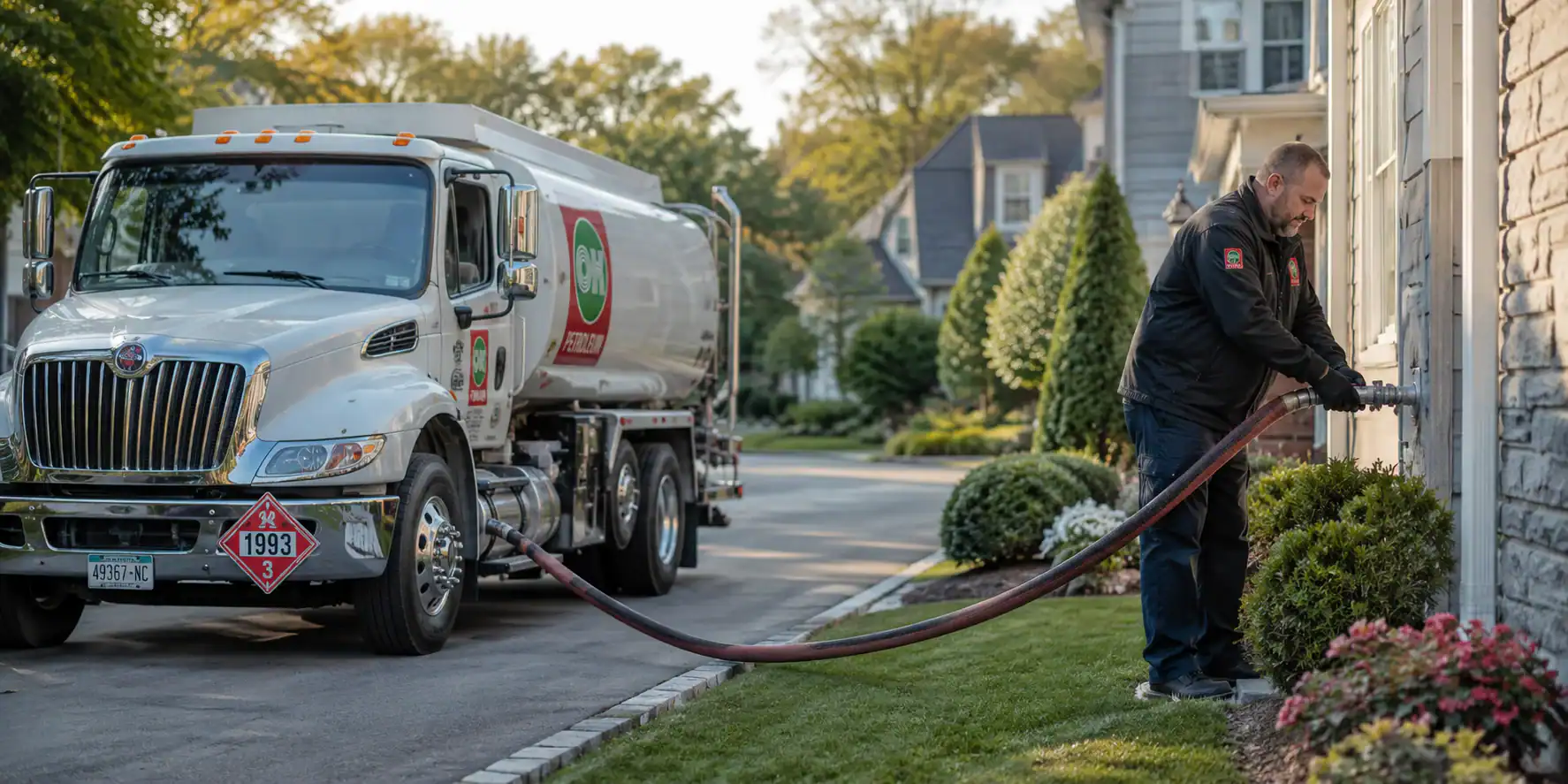
What Does Automatic Delivery Actually Cost Nassau County Homeowners?
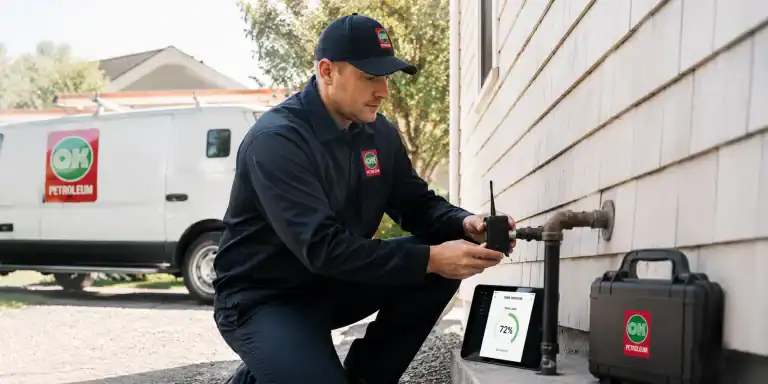
Automatic delivery is genuinely convenient. For homeowners who travel frequently, have older relatives in the house, or simply don't want to think about their fuel level, the peace of mind is real. Our predictive model tracks your usage patterns and delivers before you're in trouble — which means you're not calling anyone in a panic at 11 p.m. because the heat went out.
But that convenience typically comes with a per-gallon premium. Industry data consistently shows that contract customers — those locked into automatic delivery agreements — pay anywhere from 40 cents to over a dollar more per gallon compared to cash or will-call customers. Run the math on a Nassau County home burning 1,000 gallons in a heating season, and that gap is somewhere between $400 and $1,000 annually. That's real money, and it's worth knowing before you assume automatic delivery is the obvious choice.
The other thing worth understanding: some automatic delivery programs lock you into a contract with early termination fees. If you want to switch suppliers mid-season — or if prices drop and you want the flexibility to buy elsewhere — a contract can trap you. That's a situation we think customers should be able to avoid entirely, which is why our will-call service has no contracts and no extra fees attached.
For homeowners in Nassau County who are comfortable paying attention to their tank and ordering when the timing makes sense, will-call is almost always the more cost-effective path. You get to decide when you buy, how much you buy, and you're not paying a built-in premium for the privilege of being on our automatic schedule.
How to Choose the Right Heating Oil Service Plan for Your Home
The honest answer is that there's no single right choice — it depends on your household. But there are a few questions that make the decision clearer.
Do you travel frequently or have someone in the home who can't monitor the tank? Automatic delivery is probably worth the per-gallon premium for the reliability it provides. Our predictive model is genuinely effective, and running out of heat is not a situation you want to manage from a distance.
Are you home regularly and comfortable ordering when your gauge tells you it's time? Will-call gives you control over timing, quantity, and cost. You can order in summer when prices are lower, specify exactly how many gallons you want, and pay at delivery without a contract hanging over you. We also offer online ordering — you can place an order from your phone or computer, specify the exact number of gallons, and pay online without a phone call. There's a mobile app available on both the App Store and Google Play if that's easier.
Beyond the automatic vs. will-call decision, there are additional options worth knowing about. Budget plans let you spread your heating costs across the year in more predictable monthly payments rather than absorbing large per-delivery charges during peak winter months. Prepayment options and price protection plans are also available for homeowners who want to manage their exposure to price volatility — though as the current outlook suggests, locking in aggressively when prices are projected to be stable or declining isn't always the right move.
One thing Nassau County homeowners should know: New York State requires that all heating oil delivered in Nassau County contain at least five percent biodiesel — what's called B5 Bioheat. This is a regulatory baseline, not a premium option. Any supplier delivering to your home in Nassau County is required to meet this standard. We offer low-sulfur and biofuel-based options that go beyond the minimum, and it's worth asking any supplier you consider whether they're delivering compliant fuel.
Finally, if you're comparing prices across suppliers, be aware that some third-party comparison websites add a commission to every order you place through them — without clearly disclosing it. The price you see on the comparison site isn't always the price you'd pay ordering directly. Going directly to a supplier you trust tends to be cleaner, cheaper, and less complicated.
What Nassau County Homeowners Should Do Before Winter Arrives
The heating oil market this season looks more favorable than it did two years ago. Prices have softened from their 2022 peaks, crude oil forecasts are pointing in a reasonable direction, and homeowners who plan ahead have real options for managing their costs. But the window for acting strategically — before demand picks up and prices follow — is right now.
If you're satisfied with your current supplier and your delivery setup makes sense for your household, that's worth knowing. If you're not — if last winter left you frustrated with pricing, delivery timing, or how your supplier handled a cold snap — this is the moment to make a change, before urgency takes the decision out of your hands.
We've been delivering heating oil to Nassau County homes since 1976. No contracts on will-call service, no price gouging during cold snaps, and a delivery network embedded across Nassau and Suffolk Counties that keeps us close to the communities we serve. If you want to talk through your options before the season starts, OK Petroleum Distribution is a good place to start.