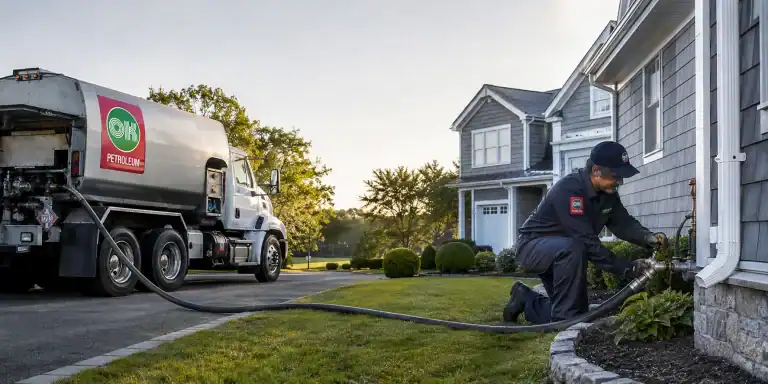




If you've recently moved into a home that runs on oil heat — or you've been on it for years and just never felt fully confident about your setup — you're not alone. A lot of Nassau County homeowners are in exactly that position. They know they need oil, they know winter is coming, and they're not entirely sure if their current supplier is giving them a fair deal or if there's a better option out there.
This guide is here to answer the questions people actually ask. How does delivery work? What's the difference between automatic and on-demand service? When should you order? And what should you watch out for when evaluating local oil suppliers in Nassau County?
Home Heating Oil: How It Works and Why Nassau County Still Relies on It
Nearly 16% of New York homes use heating oil as their primary heat source — roughly four times the national average. On Long Island, that number stays high for a straightforward reason: the housing stock. A large portion of Nassau County's homes were built during the post-WWII suburban boom of the 1940s through the 1960s, and they were constructed with oil heating systems. Towns like Levittown, Massapequa, Hicksville, and Plainview are filled with homes that were built that way and have stayed that way.
Converting from oil to gas isn't as simple as flipping a switch. It often means running new gas lines — sometimes requiring street excavation — and replacing the entire heating system. For many Nassau County homeowners, it's not worth it. And in some neighborhoods, there's no gas main on the street at all, making oil heat not just a preference but a practical necessity.
What Type of Heating Oil Are You Actually Getting?
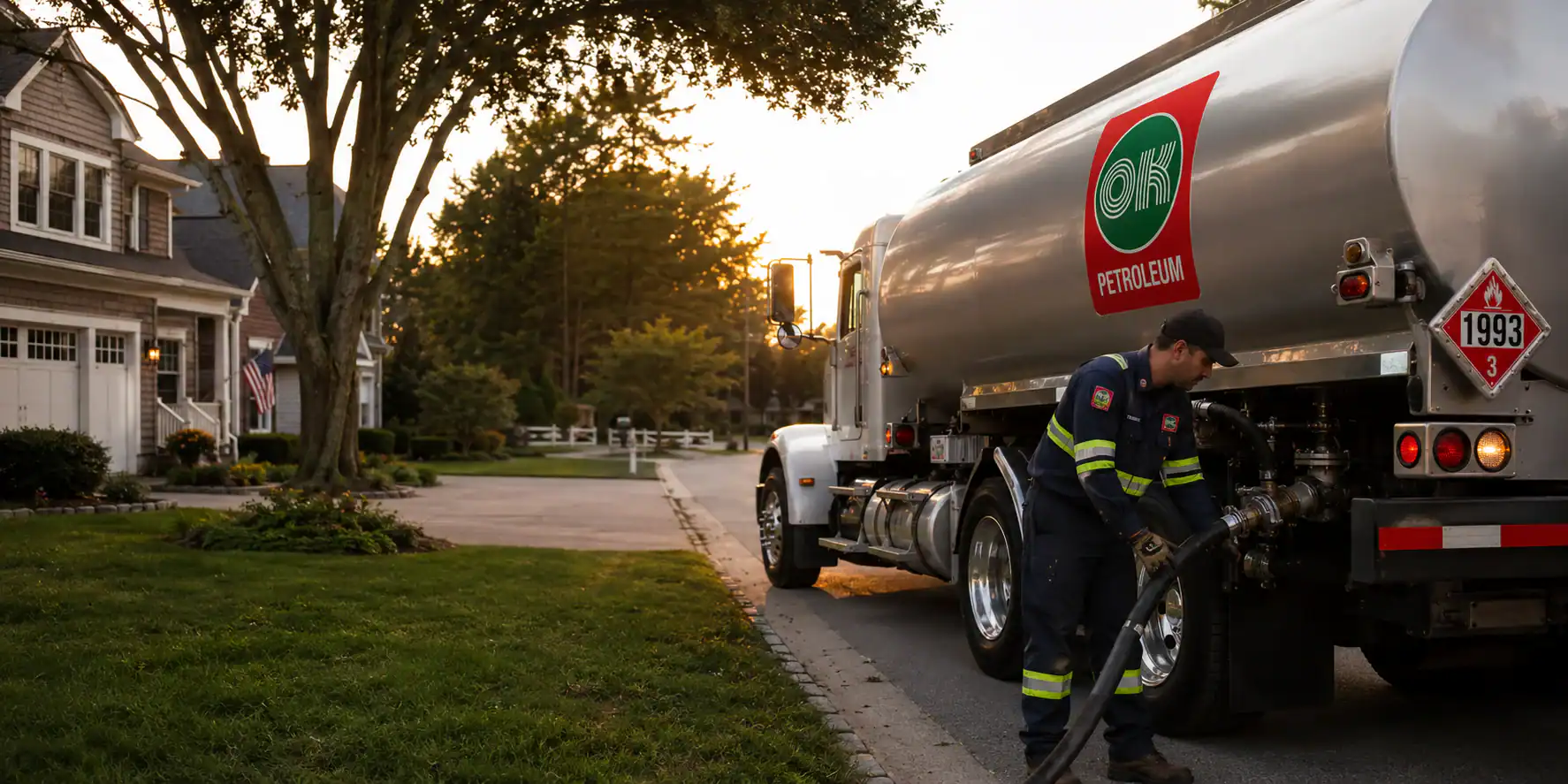
Most residential heating oil is No. 2 fuel oil — a middle-distillate petroleum product that's been used in home heating systems for decades. It's safe, energy-dense, and burns cleanly in a well-maintained burner.
New York State has mandated a minimum 5% biodiesel blend in heating oil statewide, which means every compliant supplier in Nassau County is already delivering a biofuel-blended product. That's a meaningful environmental improvement over older formulations, and New York accounts for 57% of U.S. residential and commercial biodiesel consumption — so this isn't a niche concern, it's the market standard here.
There's also the question of sulfur content. Ultra-low-sulfur heating oil burns cleaner than older formulations, reduces equipment wear, and is increasingly required by state regulations. If your supplier isn't sourcing low-sulfur fuel, your burner is working harder than it needs to and your system's lifespan is likely shorter for it.
Modern oil furnaces can achieve efficiency ratings up to 95% AFUE — meaning 95 cents of every dollar you spend on fuel actually heats your home. That kind of efficiency depends on clean fuel, regular maintenance, and a system that's properly tuned. The fuel quality your supplier delivers is the first link in that chain.
One thing worth knowing: heating oil is non-explosive and has a high flash point, meaning it won't ignite in liquid form. It's one of the safest home heating fuels available.
When Is the Best Time to Order Heating Oil in Nassau County?
Timing matters more than most people realize. Historically, heating oil prices are at their lowest in September and October, before winter demand pushes them up. By January — when Nassau County's average lows can drop to around 24°F and cold snaps arrive without much warning — you're competing with every other homeowner on the island for delivery slots and paying peak-season prices to do it.
The smarter move is to fill your tank in early fall, before the heating season kicks in. It's not about gaming the market — it's just that demand is lower, supply is stable, and we have more flexibility on scheduling. If you're on a budget plan or price protection plan, this timing is baked into how those arrangements are structured.
There's also a practical safety dimension to this. Running your tank too low — especially during a stretch of cold weather — risks pulling sediment from the bottom of the tank into your burner, which can clog filters and cause your system to shut down at the worst possible moment. Keeping your tank at least a quarter full during the heating season is a basic precaution that prevents a lot of emergency calls.
Nassau County winters are real. The proximity to the Atlantic Ocean moderates temperatures somewhat compared to inland New York, but nor'easters and sustained cold fronts are a genuine part of life here from November through March. Having your fuel situation sorted before that window opens is just good planning — and it almost always costs less than scrambling for emergency delivery in February.
Local Oil Suppliers in Nassau County: What to Look For and What to Watch Out For
There's no shortage of local oil suppliers serving Nassau County. The competitive market is good for buyers in theory — but it also means there's a wide range in quality, transparency, and terms. Some companies make it easy. Others bury fees in contract language that adds real money to your per-gallon cost over a season.
The most important thing to understand is that price per gallon is only part of the picture. A supplier with a slightly lower quoted rate but a contract full of hidden fees can end up costing you significantly more than a transparent, no-contract option. Industry data suggests those fees can add 30 to 50 cents per gallon to the true cost — which adds up fast over a Long Island winter.
Automatic Delivery vs. Will-Call: Which One Is Right for You?
This is the question most homeowners don't think to ask until they've already had a problem. There are two primary delivery models in the heating oil industry, and they serve very different types of customers.
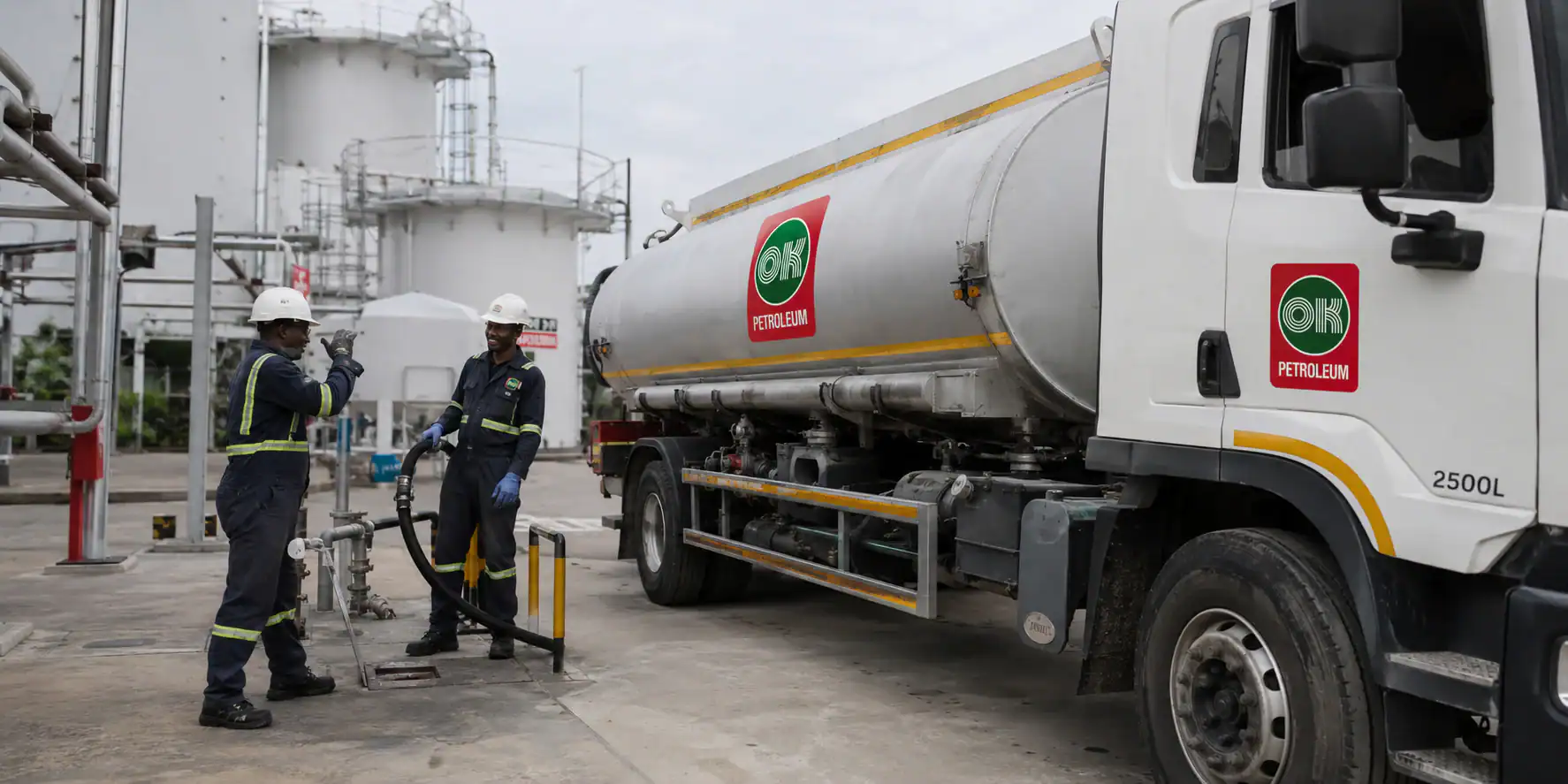
Automatic delivery means we monitor your usage — using predictive computer models that factor in your home's consumption history and current weather conditions — and schedule deliveries before your tank runs low. You don't have to track anything. You don't have to call. The oil shows up when you need it. For Nassau County's commuter households — people catching the LIRR into the city early in the morning and getting back late — this is often the better fit.
Will-call delivery, sometimes called on-demand service, puts you in control. You decide when to order, how many gallons you want, and when you want delivery. You're not on any schedule, you're not locked into any pattern, and you can order more or fewer gallons based on your budget at any given time. There are no contracts and no extra fees for this model — which matters if you've had a bad experience with a supplier who made the contract terms work in their favor, not yours.
Neither model is universally better. Automatic delivery is ideal if you travel frequently, have a busy schedule, or simply don't want to think about it. Will-call is better if you like having direct control over your spending and timing. We offer both automatic delivery and will-call service, and we don't charge extra fees for the on-demand option. You can also place orders online with the exact number of gallons you want, or through our mobile app if you're ordering on the go.
Domestic Heating Oil Suppliers: What Separates a Reliable Local Company From a Bad One
When you're evaluating domestic heating oil suppliers in Nassau County, a few things separate the ones worth trusting from the ones that cause problems.
Transparency is the clearest signal. A supplier who won't give you a straight answer on per-gallon pricing, delivery fees, or contract terms before you sign up is telling you something. The NYC Department of Consumer and Worker Protection specifically advises homeowners to always get a written agreement that includes costs, delivery schedule, gallons promised, and any other agreed-upon details — and to check carefully for any clauses that allow the price to change without notice.
Longevity and local roots matter too. A family-owned company that's been delivering to Nassau and Suffolk County homes since 1976 has navigated decades of price volatility, supply disruptions, and changing regulations. We know the delivery routes, we know the seasonal patterns, and we have relationships with wholesale terminals that affect what you ultimately pay. That institutional knowledge is real, and it's not something a newer entrant can replicate quickly.
Responsiveness is another factor that only becomes obvious when something goes wrong. Can you reach a real person by phone when your furnace shuts down on a cold night? Is there emergency delivery available? These aren't hypothetical concerns for Nassau County homeowners — cold snaps arrive fast, and the difference between a supplier with local fleet coverage and one without it is the difference between a same-day fix and a very uncomfortable 48 hours.
Finally, look for flexibility in payment options. Budget plans, price protection plans, and prepayment arrangements exist because heating oil is a volatile-price commodity and not everyone wants to absorb that volatility month to month. A supplier who offers multiple payment structures is one who's thinking about your situation, not just their own.
Choosing a Local Oil Supplier in Nassau County: The Short Version
Here's what it comes down to: the best heating oil supplier for your Nassau County home is one who's transparent about pricing, flexible on delivery and payment, reachable when something goes wrong, and has enough history in this specific market to actually know what they're doing.
Price matters — but it's not the whole story. Reliability, honest terms, and the ability to reach a real person on a cold February morning matter just as much. If you've been with a supplier who's made any of those things difficult, it might be worth a second look at what else is available.
We've been serving Nassau and Suffolk County homeowners since 1976. We offer both automatic and will-call delivery, online ordering with exact gallon specification, eco-friendly fuel options, and multiple payment plans — with no contracts or extra fees for on-demand service. If you have questions or want to get started, call us at (631) 321-0549.