


You checked the price yesterday. It's different today. You're wondering whether to order now or wait another few days to see if it drops. It's a frustrating position to be in, especially when your tank is getting low and the forecast isn't looking warm.
You're not overthinking it — heating oil prices genuinely do change day to day, sometimes by meaningful amounts. And most suppliers don't explain why. We've been delivering heating oil to Nassau County homes since 1976, and we think you deserve a straight answer. Here's what's actually behind those daily price swings, and what you can realistically do about them.
What Drives Home Heating Oil Prices Today
The biggest factor — by far — is the price of crude oil. Crude is traded on global commodity markets every single day, and those markets respond to everything: OPEC production decisions, geopolitical tensions, economic data, weather forecasts, and even investor speculation about what might happen next month. When crude moves, heating oil tends to follow within days.
But crude oil is only part of the story. The price you see from a Nassau County supplier also reflects refinery output, regional inventory levels, transportation costs, and local market competition. None of those move in lockstep. That's why the number can shift even when you haven't heard any major news.
How Global Events End Up on Your Nassau County Heating Bill
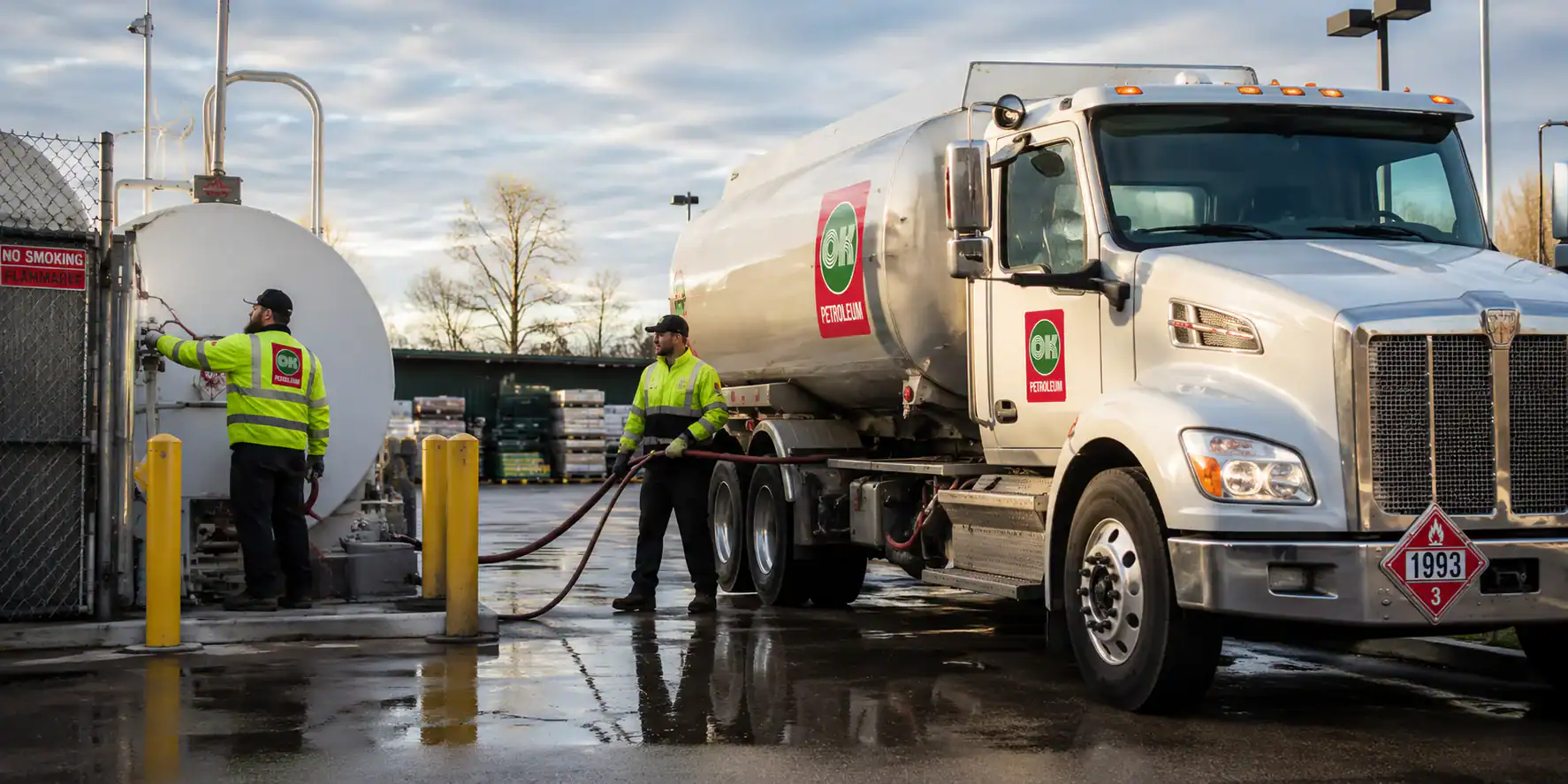
It sounds abstract, but the chain of events is surprisingly direct. A production cut announced in Riyadh tightens global crude supply. Futures traders respond within hours, pushing NYMEX heating oil contracts higher. Those contracts are priced based on delivery at New York Harbor — the main distribution hub for the entire Northeast, including Long Island.
By the time a tanker truck is making deliveries in Bellmore, Garden City, or Plainview, the price it's carrying already reflects decisions made thousands of miles away. That's not a flaw in the system. It's just how commodity pricing works. But it does mean that the price you're quoted on a Tuesday afternoon can be genuinely different from what you'd have paid on Friday — not because anyone is playing games, but because the underlying cost basis shifted.
History makes this concrete. During the early months of the COVID-19 pandemic in spring 2020, a massive crude oil oversupply caused heating oil prices to collapse — some dealers briefly posted prices below $1.00 per gallon. Then in early 2022, Russia's invasion of Ukraine sent prices spiking in the opposite direction within weeks. Neither event was predictable. Both had immediate consequences for what Nassau County homeowners paid to heat their homes.
Weather adds another layer. A cold snap sweeping through the Northeast can trigger a surge in orders that strains regional supply and pushes prices up fast. Conversely, a mild December can soften demand and pull prices down. Long Island's winters are variable enough that this plays out in real time every season — a week of temperatures in the low teens hits demand very differently than a week hovering around 40 degrees.
None of this means you're helpless. But it does mean that watching prices daily and trying to time the perfect order is genuinely difficult, even for people who follow energy markets closely. The better strategy is understanding the pattern and using the tools available to work with it rather than against it.
Why Heating Oil Prices in Nassau County Differ From Surrounding Markets
Nassau County isn't just another market in New York State. NYSERDA — the New York State Energy Research and Development Authority — tracks Long Island, which covers Nassau and Suffolk Counties, as its own distinct regional market. That distinction matters, because local conditions genuinely affect what you pay.
Nassau County has a large number of competing heating oil suppliers, and that competition tends to keep prices tighter than in less-served markets. The density of suppliers means you have real options, and companies that want your business have to price accordingly. That's a structural advantage for Nassau County homeowners that doesn't exist everywhere.
At the same time, the county's housing stock creates consistently high demand. Much of Nassau County was built during the post-World War II suburban boom — Levittown, which sits in Nassau County, is one of the most well-known examples of mass-produced suburban development in the country. Homes built in that era were designed around oil heat, and a large share of them still run on it today. That baseline demand, concentrated in a dense suburban area, means suppliers are active here year-round, not just during peak season.
What this means practically: the price you see for a Nassau County delivery reflects both the global forces described above and the specific dynamics of this local market. Comparing prices across a few local suppliers is worth doing, but the range you'll find between them is typically narrower than people expect — because everyone is drawing from the same regional supply chain, through the same New York Harbor terminal, at roughly the same underlying cost.
Heating Oil Cost Per Gallon: What You're Actually Paying For
When you see a price per gallon, it's easy to treat it as a single number set by whoever answered the phone. In reality, it's the sum of several distinct costs stacked on top of each other.
Crude oil is the largest component — typically more than half the final price. Refining adds cost. So does transporting the refined product from the terminal to the delivery truck to your tank. Then there's the supplier's operating costs: drivers, equipment, insurance, and overhead.
Your order size also matters. Smaller deliveries — under 100 gallons — often cost more per gallon than larger ones, because the fixed costs of a delivery run get spread over fewer gallons. If you're ordering just enough to get through the week, you're likely paying a premium compared to someone who fills the tank.
Is There a Better Time of Year to Buy Heating Oil in Nassau County?
Yes — and it's probably not when most people think about it. Heating oil prices follow a fairly predictable seasonal pattern. Demand is highest from October through March, which is when prices tend to be highest. Once spring arrives and thermostats go down, demand drops and prices typically follow.
Summer is historically the lowest-price window for heating oil. Most homeowners aren't thinking about their oil tank in July, which is exactly why it can be the smartest time to act. Topping off your tank in the off-season — or locking in a prepay rate before the heating season begins — can meaningfully reduce what you pay over the course of a full year.
Beyond timing, we offer structured tools designed specifically to help Nassau County homeowners manage price volatility. A prepayment plan lets you purchase a set amount of oil at today's price before the season starts, locking in your cost before winter demand pushes prices up. A budget plan spreads your estimated annual cost into equal monthly payments, so you're not hit with a large bill in January when usage peaks. A price protection plan — sometimes called a price cap — sets a ceiling on what you'll pay per gallon, so you benefit if prices drop but you're covered if they spike.
None of these options eliminate the underlying volatility in the market. But they give you a way to plan around it instead of reacting to it every time you check the gauge. For a Nassau County household that uses 850 to 1,200 gallons in a typical winter, the difference between buying strategically and buying reactively can add up to real money over a season.
Current Heating Oil Prices: How to Know If You're Getting a Fair Deal
The honest answer is that there's no single "right" price — it changes daily, varies by ZIP code, and depends on your order size and payment method. As of mid-2026, Long Island heating oil prices from local suppliers have ranged from roughly $4.17 to $4.59 per gallon, with broader national ranges running from $3.34 to $5.57 depending on location and order specifics. Those numbers will be different by the time you read this, which is exactly the point.
What you can do is benchmark. NYSERDA publishes regional heating fuel price data specifically for Long Island, which gives you an objective, state-sourced reference point that isn't tied to any single supplier. Price comparison tools that pull quotes from multiple Nassau County suppliers by ZIP code are also worth using — not necessarily to find the absolute lowest number, but to understand where the market is sitting on a given day.
Beyond the per-gallon price, pay attention to what's included. Some suppliers charge delivery fees, minimum order fees, or credit card surcharges that don't show up in the headline number. A price that looks lower can end up higher once those get added in. Ask upfront what the all-in cost is for your address and your typical order size.
We've been in this business long enough to know that price is rarely the only thing that matters once you've had a bad experience — a missed delivery during a cold snap, a surprise charge on your invoice, or a contract you couldn't get out of. When you're comparing options in Nassau County, the total picture — price, reliability, transparency, and flexibility — is what actually determines whether you got a good deal.
What Nassau County Homeowners Can Do About Heating Oil Price Swings
Daily price changes aren't going away. Crude oil markets, seasonal demand, weather, and global events will keep moving the number whether you're watching it or not. What you can control is how you respond to that reality.
Order larger quantities when you can, consider locking in prices before peak season, and look into payment plans that smooth out the volatility over time. If you'd rather not think about it at all, automatic delivery takes the guesswork out entirely — your usage gets monitored and your tank gets filled before you run low, without you having to track prices or place orders.
We've been delivering heating oil to homes in Baldwin, Bellmore, Garden City, Mineola, Plainview, and communities across Nassau County, NY since 1976. No contracts required for on-demand service, online ordering available, and straightforward pricing without hidden fees. If you want to know where prices are today or talk through the delivery option that fits your situation, give us a call at (631) 321-0549.