


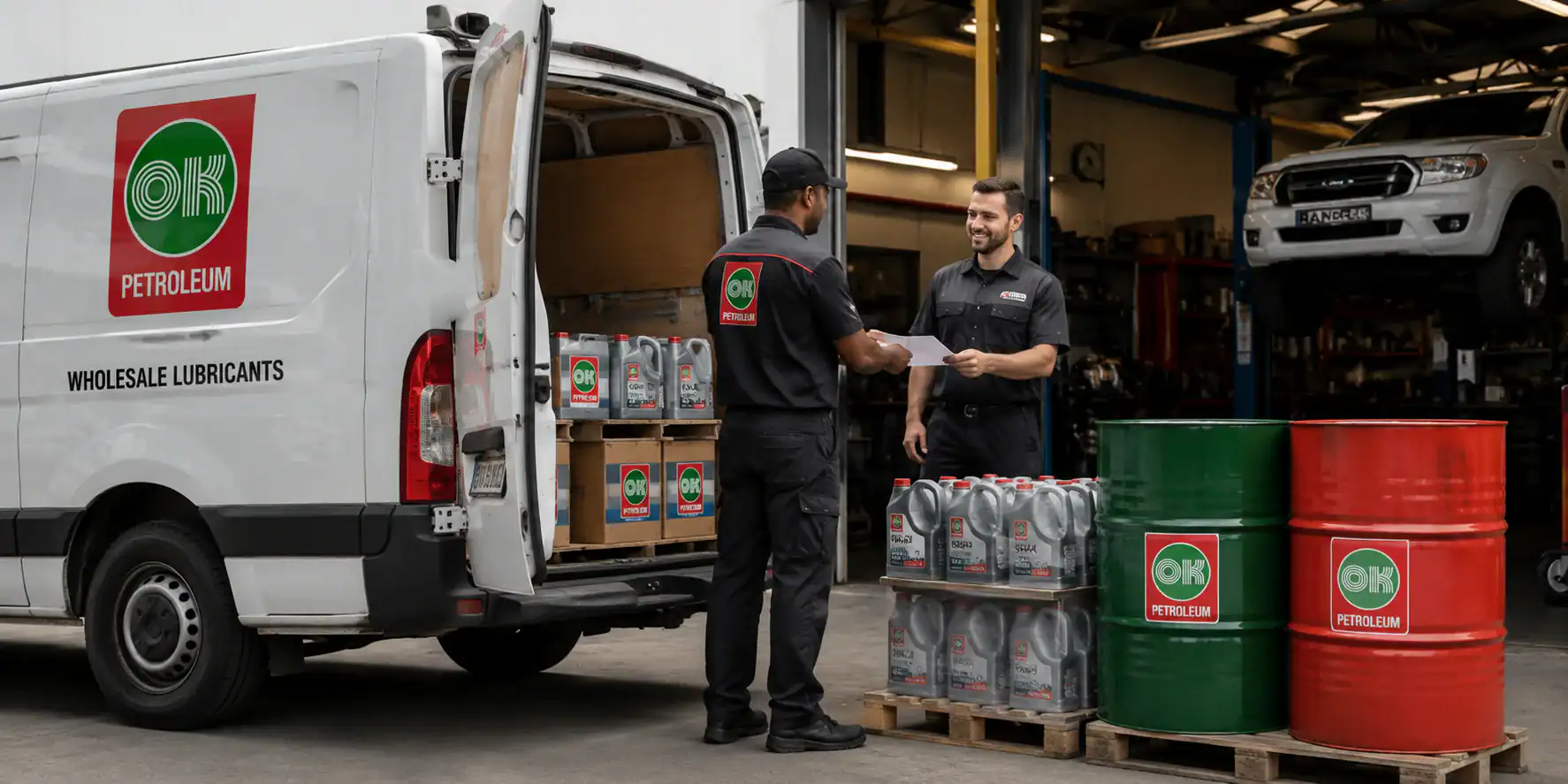
If you own a shop in Mineola, run a fleet out of Hicksville, or manage a facility along Old Country Road, you already know that fuel is one of those costs that quietly eats into your margins every month. Heating oil in the winter, motor oil year-round, diesel when you need it — and somehow you're juggling two or three different vendors to cover it all.
This guide is for the business owner who's tired of that friction. We'll walk through what wholesale motor oil pricing actually looks like in Nassau County, how cash on delivery oil factors into a smarter commercial fuel budget, and what it means to work with a supplier who can actually handle all of it.
Finding Reliable Diesel Suppliers in Nassau County
Before you can budget accurately, you need to understand the market you're buying in. Nassau County is one of the most densely populated suburban counties in the country, and that density affects everything — delivery logistics, pricing, and how quickly a supplier can actually get to you when you need a fill.
Long Island has over 2,000 heating oil dealers competing for customers, and many have expanded into commercial diesel and motor oil distribution. That sounds like good news, but it creates a real problem: a lot of companies that call themselves petroleum distributors are primarily residential heating oil operations that have tacked on commercial services as an afterthought. The difference between a genuine wholesale distributor and a residential company with a few commercial accounts is significant — and it shows up in product depth, pricing, and reliability.
Cheapest Diesel Fuel Near Me: What Actually Drives the Price Difference
When Nassau County business owners search for the cheapest diesel fuel near them, they're usually comparing pump prices or delivery quotes without fully understanding what's behind the number. A few things matter more than most buyers realize.
First, volume. Wholesale diesel pricing is tied closely to how much you're ordering at once. A fleet operator who needs regular bulk fills is going to see very different pricing than a small contractor ordering a few hundred gallons on a one-off basis. The more predictable and consistent your volume, the more leverage you have in a pricing conversation.
Second, the delivery model. Cash on delivery oil pricing — where you pay at the time of delivery without a contract — is typically lower than full-service contract pricing because you're not paying for the overhead that comes with automatic monitoring, price-lock guarantees, and managed service. Industry data puts the premium for automatic delivery at $0.40 to $0.50 per gallon above will-call or COD pricing. On a commercial diesel account moving thousands of gallons a year, that spread adds up fast.
Third, the supplier's sourcing infrastructure. Reputable distributors load directly from bulk fuel terminals — in the New York Harbor area for most Nassau County suppliers — which means fresh product and consistent quality. A company that stores its own product in tanks that don't turn over quickly is a different situation, and it's worth asking the question before you commit to a supplier relationship.
For Nassau County businesses along commercial corridors like Hempstead Turnpike or Merrick Road, the practical reality is that not every diesel supplier operates with the local logistics knowledge to deliver reliably into dense, traffic-heavy areas. A distributor with actual delivery infrastructure on Long Island — not just a dispatch center routing trucks from somewhere else — is going to be more dependable when you're working against a deadline.
The short version: the cheapest price on paper isn't always the cheapest price in practice. Factor in delivery reliability, product freshness, and whether the supplier can actually scale with your needs before you make a decision based on per-gallon price alone.
What Wholesale Motor Oil Pricing Looks Like by Viscosity Grade
This is the part that most online guides skip entirely, because most guides are written for homeowners buying heating oil — not for shop owners who need to budget for HD30, 10W30, ATF, and antifreeze in the same quarter.
Wholesale motor oil is priced by viscosity grade, container format, and order volume. The grades most commonly used in commercial settings across Nassau County — HD30, HD40, 5W20, 5W30, 10W30, 10W40, 20W50 — each carry slightly different price points depending on the base stock and additive package involved. Transmission fluids like ATF, ATF Plus 4, and Mercon 5 are priced separately, as are gear oils like G.O. If you're also buying antifreeze — ShellZone, Texaco, Prestone, or Pride — those are typically quoted by the drum or pallet.
Container format matters a lot for budgeting. Bulk delivery (tanker or tote) is priced differently than drum delivery, which is priced differently than case quantities. Most commercial accounts in Nassau County that are running a busy service bay or managing a small fleet find that drum delivery hits the right balance between per-unit cost and storage practicality.
The honest answer about wholesale motor oil pricing is that it's not published anywhere online the way residential heating oil prices are. There's no aggregator showing you live per-gallon prices for 10W30 by ZIP code. That opacity is frustrating for buyers trying to build an accurate budget, and it's one of the reasons commercial accounts end up overpaying — they don't have a benchmark, so they accept the first quote they get.
What we can tell you is that buying your motor oil through a petroleum distributor who also handles your heating oil and diesel creates real pricing leverage that you don't get when you're buying from a parts supplier or a big-box distributor. A single-supplier relationship with meaningful volume across multiple product categories is worth more in a pricing negotiation than any one product order on its own.
Fuel Delivery Options for Nassau County Commercial Accounts
The way you receive fuel matters almost as much as what you pay for it. Nassau County commercial operators have different needs than residential customers, and the delivery model you choose should reflect how your business actually runs — not how a residential heating oil company prefers to operate.
There are two primary models: automatic delivery, where a predictive system monitors your usage and schedules deliveries before you run low, and on-demand will-call service, where you order when you're ready and take delivery on your schedule. Both have legitimate use cases for commercial accounts, and the right choice depends on your operation. What we won't tell you is that you have to pick one and stick with it forever — or change companies if your needs change.
Automatic vs. Will-Call: Which Delivery Model Fits a Commercial Operation?
Automatic delivery makes the most sense for commercial facilities with consistent, predictable fuel usage — a building that runs the same heating load every winter, or a fleet with steady mileage patterns. The predictive model takes the guesswork out of scheduling, which is genuinely useful if you're managing a facility and don't want fuel logistics on your daily mental list. The trade-off is that you're paying a service premium — that $0.40 to $0.50 per gallon above COD pricing — for the convenience and the managed monitoring.
Will-call, or cash on delivery oil, gives you control. You decide when to order, how many gallons you want, and you pay at the time of delivery without a contract hanging over the relationship. For commercial accounts that have variable usage — a contractor whose equipment runs heavy in summer and light in winter, or a shop whose heating needs vary with the season — that flexibility is worth more than the service convenience of automatic delivery.
The thing most Nassau County business owners don't realize is that these two models don't have to mean two different suppliers. If your heating fuel needs are consistent enough for automatic delivery but your motor oil and diesel are better handled on a will-call basis, you should be able to manage both through the same account. That's not how most residential heating oil companies are set up to operate, but it's exactly the kind of flexibility that a full-service petroleum distributor can offer.
What you want to avoid is being locked into a contract for a service model that doesn't fit your actual usage. In a market where Nassau County homeowners and business owners alike have been burned by contract terms they didn't fully understand, the ability to operate on a no-contract, no-extra-fees basis for on-demand service is a real protection — not just a marketing point.
Why Nassau County Businesses Are Consolidating Petroleum Vendors
Here's the situation a lot of Nassau County shop owners and fleet operators are in right now: they're buying heating oil from one company, motor oil from a parts distributor or a national supplier, and diesel from whoever has the best price that week. Three vendors, three invoices, three sets of delivery windows to coordinate, and no real pricing leverage with any of them because the volume is spread too thin.
The consolidation math is straightforward. When you bring your heating oil, motor oil, diesel, and antifreeze purchases under one supplier relationship, your total volume across all product categories becomes a negotiating asset. You're no longer a small heating oil account and a small motor oil account — you're a meaningful commercial customer with a real book of business to offer.
Beyond pricing, there's the operational simplicity. One call, one account, one delivery relationship to manage. For a shop owner on Hempstead Turnpike who's already managing staffing, customer relationships, and equipment maintenance, eliminating vendor friction from the fuel side of the business is a genuine quality-of-life improvement.
The hesitation we hear from commercial accounts — especially those who've worked primarily with residential heating oil companies — is whether a petroleum distributor can actually handle wholesale motor oil at a professional level. It's a fair question. The answer depends entirely on the supplier. A company that distributes wholesale motor oil across the Tri-State area and nationally, carries a full catalog of viscosity grades from HD30 through 20W50 along with ATF variants and transmission fluids, and has been doing it since 1976, is a different proposition than a heating oil company that added motor oil to their website last year.
Nassau County has a high concentration of exactly the kind of businesses that benefit most from this model — auto repair shops, car dealerships, construction contractors, and fleet operators clustered along commercial corridors from Garden City to Plainview. If you're one of them, the question worth asking isn't whether consolidation makes sense. It's whether your current suppliers can actually support it.
How to Build a Smarter Fuel Budget for Your Nassau County Business
The businesses that manage their fuel costs most effectively in Nassau County aren't necessarily the ones chasing the lowest per-gallon price every month. They're the ones who've built a supplier relationship that gives them pricing leverage, delivery reliability, and the flexibility to adjust as their needs change — without being locked into a contract that doesn't serve them.
Cash on delivery oil is a legitimate cost-control strategy for commercial accounts. So is consolidating your motor oil, diesel, and heating fuel under one distributor. Neither requires you to sacrifice quality or service — it just requires finding a supplier who can actually deliver on both.
If you're a Nassau County business owner trying to get your fuel budget under control, we've been doing this work on Long Island since 1976. Give us a call at (631) 321-0549 and let's talk through what your operation actually needs.